
Abolish Michigan’s Hunting & Fishing Fee Hikes: Why Higher DNR License Costs Are the Wrong Solution
Michigan’s proposed hunting and fishing license fee increases would burden families, discourage participation, and weaken conservation long-term. Here’s why raising DNR fees is the wrong solution for funding Michigan’s outdoors.

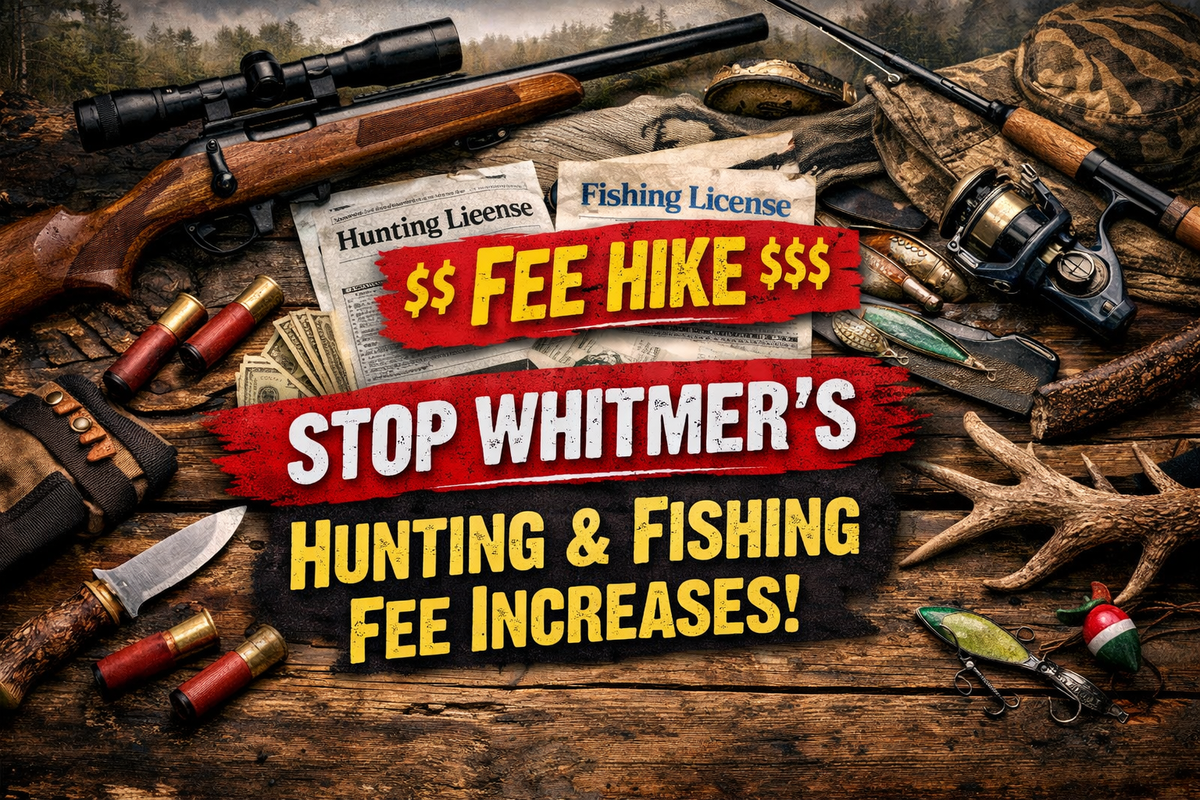
Michigan’s Outdoor Heritage Is Not a Revenue Stream
Michigan is built on its outdoors.
From the Upper Peninsula whitetail woods to Lake Michigan salmon runs, from spring turkey mornings to fall duck blinds — hunting and fishing aren’t hobbies here. They’re heritage. They’re how families bond. They’re how many put food on the table. They’re part of what makes Michigan, Michigan.
Now, Governor Gretchen Whitmer’s proposal to increase hunting and fishing license fees in order to boost Michigan Department of Natural Resources (DNR) funding risks turning that heritage into a budget balancing tool.
If passed, the fee hikes would raise the cost of participating in Michigan’s outdoor traditions — asking hunters and anglers to shoulder more of the state’s financial burden.
That idea should be abolished.
Raising Hunting and Fishing License Fees Punishes the Wrong People
Hunters and anglers already fund conservation.
Through license purchases, federal excise taxes on firearms, ammunition, bows, fishing equipment, and boat fuel (via the Pittman-Robertson and Dingell-Johnson Acts), sportsmen contribute billions nationally toward wildlife management and habitat conservation. In Michigan, license sales directly fund DNR operations, wildlife biologists, conservation officers, fisheries management, and public land maintenance.
The people being asked to pay more are the same people already funding the system.
At a time when inflation continues to impact groceries, fuel, housing, and equipment costs, increasing license fees adds yet another expense to families trying to maintain their outdoor lifestyle. For many households, especially rural and middle-class families, these aren’t luxury purchases — they are annual traditions.
Higher fees don’t just “adjust for inflation.” They change behavior.
And when participation drops, revenue drops with it.
Higher Costs Risk Lower Participation
Across the country, hunting participation has gradually declined over decades. Wildlife agencies already struggle to recruit and retain new hunters and anglers. Youth engagement programs exist precisely because participation is fragile.
What happens when you increase the cost barrier?
- Fewer first-time hunters buy licenses.
- Fewer casual anglers renew.
- Fewer families introduce kids to the outdoors.
- More people opt out entirely.
Conservation funding in Michigan relies heavily on participation. If license sales decrease, long-term funding weakens — defeating the very purpose of the increase.
It’s a short-term budget patch with potentially long-term consequences.
Conservation Funding Needs Reform — Not Fee Hikes
The DNR’s funding structure is complex. It relies heavily on restricted funds tied directly to license purchases and specific user fees. That structure creates pressure when costs rise but participation stagnates.
But raising fees should not be the default solution.
Before increasing costs on residents, lawmakers should examine:
- Internal spending efficiency
- Administrative overhead
- Alternative funding models
- Broader state budget reallocations
- Public-private partnerships
- Expanding voluntary conservation contributions
Conservation is a public good. Wildlife, waterways, and state lands benefit every Michigander — not just those who buy licenses.
Shifting more burden onto hunters and anglers narrows responsibility instead of broadening it.
Michigan Families Are Already Paying More
Let’s be honest: the average Michigan outdoorsman is already paying more.
- Gas to reach hunting land costs more.
- Ammunition and firearms prices are up.
- Boats and equipment cost more.
- Food and household expenses have climbed.
Adding license fee increases compounds that pressure.
For some, it may be manageable. For others, it could be the difference between buying tags for the family or sitting the season out.
Public policy should protect access to natural resources — not make it harder to participate.
Outdoor Traditions Are Cultural Assets
Michigan ranks among the top states in hunting participation and freshwater fishing. These activities support:
- Local small businesses
- Rural economies
- Tourism revenue
- Conservation education
- Wildlife management stability
When participation declines, it doesn’t just impact DNR budgets. It impacts bait shops, outfitters, marinas, guides, and small-town restaurants.
Outdoor recreation is an economic engine.
Raising barriers to entry risks weakening that engine.
The Long-Term Risk: Pricing Out the Next Generation
Perhaps the most concerning consequence is cultural.
If license fees continue rising over time, hunting and fishing risk becoming less accessible to young people and working-class families.
Outdoor access should not become something only the financially comfortable can afford.
The future of conservation depends on the next generation caring enough to participate. Price hikes send the wrong signal.
There Are Smarter Alternatives
If the goal is strengthening conservation funding in Michigan, policymakers should explore broader reforms, such as:
- Diversifying conservation revenue sources
- Allocating a portion of general fund revenue to DNR operations
- Creating optional conservation stamps or voluntary upgrades
- Expanding outdoor recreation partnerships
- Leveraging tourism taxes for conservation initiatives
These solutions spread responsibility across beneficiaries of public lands — not just license holders.
The Bottom Line
Michigan’s hunting and fishing license fee increases are the wrong solution.
They burden families.
They risk reducing participation.
They threaten long-term conservation funding.
They send the wrong message about access to public resources.
Hunters and anglers are not the problem. They are the backbone of conservation in this state.
If Michigan values its outdoor heritage, it should protect participation — not price it out.
This proposal deserves serious scrutiny — and ultimately, it should be abolished