
Early Spring Deer Scouting: How March Prep Leads to November Rut Success
Want better results during the November rut? It starts months earlier. Learn how early spring deer scouting reveals last season’s rut secrets and helps you locate bedding areas, scrapes, and rub lines that can lead to your biggest buck yet.

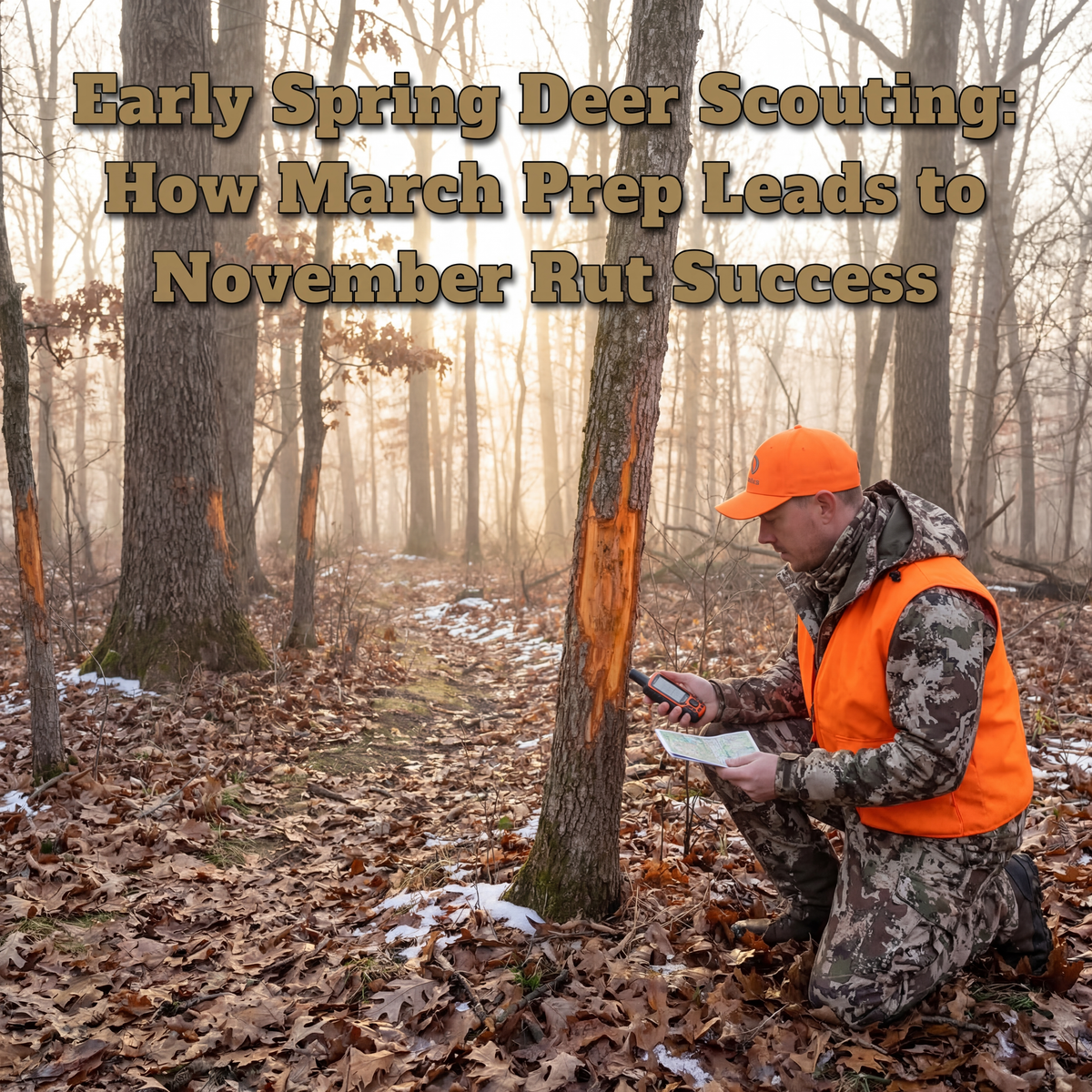
Every deer hunter dreams about that one unforgettable November morning—the crunch of leaves, the cold air, and the moment a mature buck steps into range during the rut.
But here’s the truth many hunters overlook: those moments are rarely accidental.
The hunters who consistently find success during the rut are often the same ones putting in work months earlier. Early spring, specifically the short window between snowmelt and green-up, offers one of the most valuable scouting opportunities of the entire year.
During this time, the woods are open, last season’s sign is still visible, and the story of the previous rut is written across the landscape.
If you know what to look for, March scouting can reveal exactly where you should be sitting when November arrives.
Let’s break down three of the most important things to locate during early spring whitetail scouting.
1. Identify Doe Bedding Areas
The rut revolves around one thing: does.
Bucks spend November cruising, scent-checking, and searching for receptive females. That means if you want to find mature bucks during daylight, you need to understand where does spend their time.
Doe bedding areas are often some of the most consistent daylight activity locations in the woods.
What to Look for During Spring Scouting
When you’re scouting in March, focus on finding thick bedding cover near major fall food sources. Common locations include:
- Oak flats
- Agricultural fields
- Food plots
- Orchards
- Clear cuts
- Edges of swamps
- Ridge tops in hill country
Because vegetation hasn’t grown yet, bedding sites are much easier to see. Look for clusters of oval depressions in the leaves or soil.
A key detail:
If you find multiple beds grouped together, you’re likely looking at a doe family group.
Single beds, on the other hand, often belong to mature bucks.
Why This Matters for November
Once you locate a doe bedding area, pay attention to the downwind side of that cover relative to typical fall winds.
Mature bucks often cruise these edges during the rut, scent-checking bedding areas without exposing themselves.
These zones can become deadly late-morning rut setups in November.
2. Locate Scrapes Hidden in Cover
Scrapes are one of the most recognizable signs of rut activity.
Bucks create these pawed-out patches of dirt as communication hubs, leaving scent and checking for does.
But not all scrapes are equal.
Field Edge Scrapes vs. Interior Scrapes
Many hunters focus on scrapes along field edges. While these are easy to find, they’re often visited mostly at night.
The real gold lies deeper in the woods.
During early spring scouting, keep an eye out for scrapes located inside thick cover, especially in transition areas between bedding and food sources.
These interior scrapes often see much more daylight activity.
The Best Sign to Find
If you stumble across multiple scrapes clustered together in thick cover, pay close attention.
This usually indicates a rut communication hub, where bucks repeatedly check for does moving between feeding and bedding areas.
Mark these spots on your map and consider hanging a stand months before the season opens.
Come November, this location could become one of your most productive rut ambush spots.
3. Find Rub Line Pinch Points
Another powerful clue left behind from the previous season is the rub line.
Rub lines are created when bucks rake their antlers against trees, leaving visible scars in the bark.
In early spring, these marks often appear as bright orange slashes or exposed wood on tree trunks.
What Is a Pinch Point?
A pinch point is any terrain feature that funnels deer movement through a narrow corridor.
Examples include:
- Narrow strips of timber between fields
- Saddles in ridges
- Drainage crossings
- Edges of swamps
- Fence crossings
- Thick cover connecting bedding areas
These natural funnels force deer to travel through concentrated areas, making them ideal hunting locations.
How to Confirm a Rut Travel Corridor
Once snow melts, visit these potential pinch points and look for:
- Multiple deer trails
- Rub lines along those trails
- Converging travel routes
If you find several trails intersecting with rubs running along them, you’ve likely discovered a rut travel corridor used by mature bucks.
Hunting Strategy for These Spots
The best pinch points allow you to set up multiple stand locations based on wind direction.
Plan entry routes that allow you to slip in well before daylight without disturbing deer movement.
These areas can produce action throughout the entire day during the rut, so they’re excellent locations for long sits.
Why March Is the Best Time to Scout
Many hunters wait until summer or early fall to scout. By then, thick vegetation hides much of the sign from the previous season.
March offers several advantages:
- No foliage blocking visibility
- Last season’s rubs and scrapes still visible
- Bedding areas easier to identify
- Less risk of disturbing deer during hunting season
It’s like walking through a map of last year’s rut activity.
The more time you spend observing and learning now, the better prepared you’ll be when the rut returns.
Final Thoughts: November Success Starts Months Earlier
Harvesting a mature buck during the rut isn’t just about luck.
The hunters who consistently find success are often the ones who did their homework long before opening day.
By scouting in early spring and identifying:
- Doe bedding areas
- Interior scrape zones
- Rub line pinch points
…you dramatically increase your odds of being in the right place when the rut explodes in November.
So lace up your boots, grab a map, and head into the woods this spring.
Because the buck of a lifetime might already be telling you exactly where to find him next fall.