Michigan DNR Expands Digital Tagging for Hunters: What You Need to Know About eHarvest in 2026
Michigan DNR is expanding digital eHarvest tagging in 2026 for deer, turkey, bear and more. Learn how the Hunt Fish app works, the benefits of digital kill tags, and why some Michigan hunters are hesitant about the change.

Michigan hunters, big changes are coming.
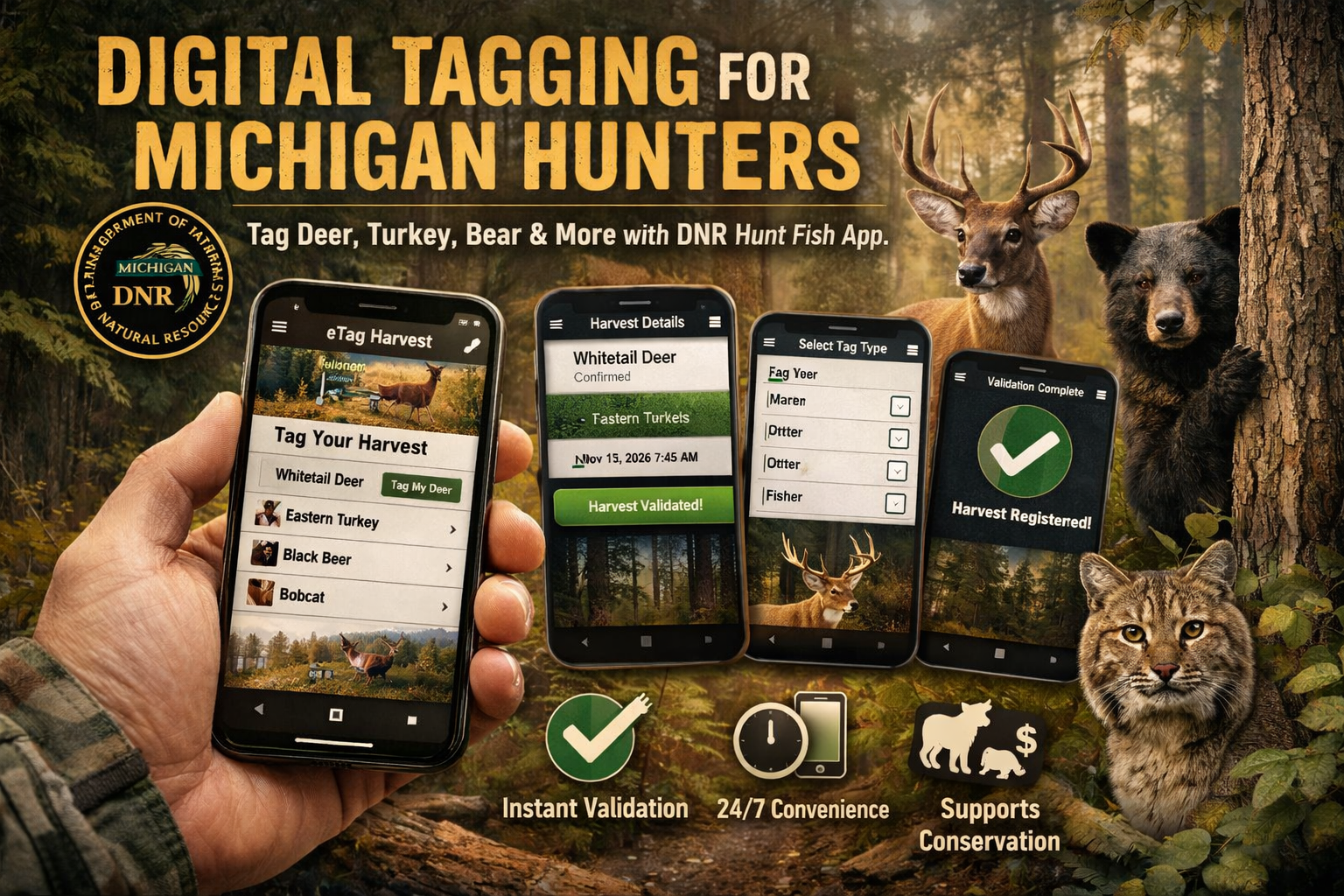
The Michigan Department of Natural Resources (DNR) is officially expanding its eHarvest digital tagging system, giving hunters the option to tag harvested game directly from their smartphone. Starting with the 2026 license year, digital tagging will apply to most species that require a kill tag — making the process faster, simpler, and more modern than ever before.
If you hunt deer in the hardwoods, chase spring gobblers, or draw a bear tag up north, here’s everything you need to know — including why some hunters aren’t thrilled about it.
What Is Michigan’s eHarvest Digital Tagging System?
The Michigan DNR eHarvest system allows hunters to validate and tag harvested animals electronically through the Michigan DNR Hunt Fish mobile app.
Instead of attaching a traditional paper tag immediately after harvest, hunters can now:
- Validate their harvest digitally
- Receive an instant timestamp
- Store proof of harvest directly on their device
This expansion follows successful pilot programs for turkey tagging in 2024 and 2025. Beginning in 2026, it will apply to:
- Whitetail Deer
- Turkey
- Black Bear
- Bobcat
- Otter
- Fisher
- Marten
Michigan joins a growing list of states modernizing harvest reporting to improve convenience and data accuracy.
When Does Digital Tagging Start?
Digital eHarvest tagging will be available beginning March 1, 2026, through the Michigan DNR Hunt Fish mobile app.
Hunters should:
- Visit their device’s app store
- Search for Michigan DNR Hunt Fish
- Download or update to the latest version
If your app store says “Get” or “Install,” you’ll need to download the newest version to access digital tags.
Is Digital Tagging Required?
No — digital tagging is optional.
Traditional paper kill tags will still be available through:
- Michigan eLicense
- Retail license agents
Here’s the difference:
- Tags purchased in the app = digital eHarvest tags
- Tags purchased elsewhere = paper tags
This allows every hunter to choose what fits their comfort level.
Key Benefits of Michigan’s Digital eHarvest Tags
Simpler Field Process
If you are in possession of your harvested animal, you do not need to attach a physical tag immediately.
This includes when:
- Transporting the animal yourself
- Taking it directly to a processor or taxidermist
- Storing it at your primary residence
A physical tag is only required if the animal leaves your possession. At that point, a durable tag with your license number must be attached.
Instant Validation — Even Without Service
One major concern hunters have is cell service in remote areas.
Good news: cellular service is not required at the time of validation.
The harvest is immediately:
- Recorded
- Timestamped
- Stored on your device
This keeps enforcement standards intact while making the process easier in the field.
24/7 Access
Digital tags are available anytime through the app. No more worrying about losing paper tags or forgetting them at home.
Supports Conservation
Reducing printing and administrative costs allows more funding to go toward:
- Wildlife research
- Habitat management
- Conservation enforcement
- Public land improvements
That’s something we can all get behind.
Why Some Michigan Hunters May Not Like Digital Tagging
Now let’s talk about the other side.
Because not everyone is excited about this.
1. Tradition Matters
For many hunters, tagging an animal with a physical paper tag is part of the ritual. It’s tangible. It feels official. It’s something you physically attach to your harvest after the work is done.
A digital confirmation on a phone screen doesn’t carry that same weight for some people.
Hunting is built on tradition — and change can feel like erosion of that heritage.
2. Technology Fatigue
Many hunters go to the woods to disconnect.
- No emails
- No notifications
- No screens
The idea of pulling out a smartphone immediately after a harvest feels like the opposite of why some people hunt in the first place.
For hunters who intentionally leave their phones in the truck, this system may feel intrusive — even if it’s optional.
3. Concerns About Reliability
Even though the DNR states that cellular service isn’t required, some hunters still worry about:
- App crashes
- Dead batteries
- Software glitches
- Updates not working
- Losing access in extreme cold
When you’re miles deep in the woods in November, simplicity matters. A paper tag and a pen feel foolproof.
4. Privacy & Data Concerns
Some hunters are cautious about digital systems tracking harvest data instantly. While accurate harvest reporting is critical for wildlife management, there is sometimes skepticism about how data is stored and used.
Even if those concerns are minimal or unfounded, perception matters.
5. Learning Curve for Older Hunters
Not every Michigan hunter is tech-savvy.
For older sportsmen especially, navigating apps, updates, and digital validation may feel frustrating compared to the straightforward process they’ve followed for decades.
The Bottom Line
The important thing to remember:
Digital tagging is optional.
If you love paper tags, keep using them.
If you’re comfortable using technology and want a streamlined process, the digital eHarvest system is there for you.
At the end of the day, this isn’t about replacing hunting traditions — it’s about modernizing reporting systems while maintaining conservation standards.
As hunters, we all share the same goal:
- Protect wildlife
- Preserve habitat
- Pass on the tradition
Whether you tap a screen or attach a paper tag, the responsibility remains the same.
Final Thoughts from WildNatureMan
Hunting is bigger than technology.
It’s about:
- Discipline
- Respect
- Patience
- Stewardship
If digital tagging makes conservation stronger and reporting more accurate, that’s worth considering.
But it’s also okay to appreciate the simplicity of pen and paper.
Know your options. Stay compliant. Respect the resource.
See you in the woods.
— J. Smith
WildNatureMan