
Why Shed Hunting Is Way Harder Than You Think — And How to Win More Antlers This Spring
Shed hunting isn’t a casual spring walk — it’s a grind. If you’ve ever walked miles without finding a single antler, you’re not alone. Here’s why shed hunting is harder than it looks — and the proven strategies that will help you find more whitetail sheds this season.

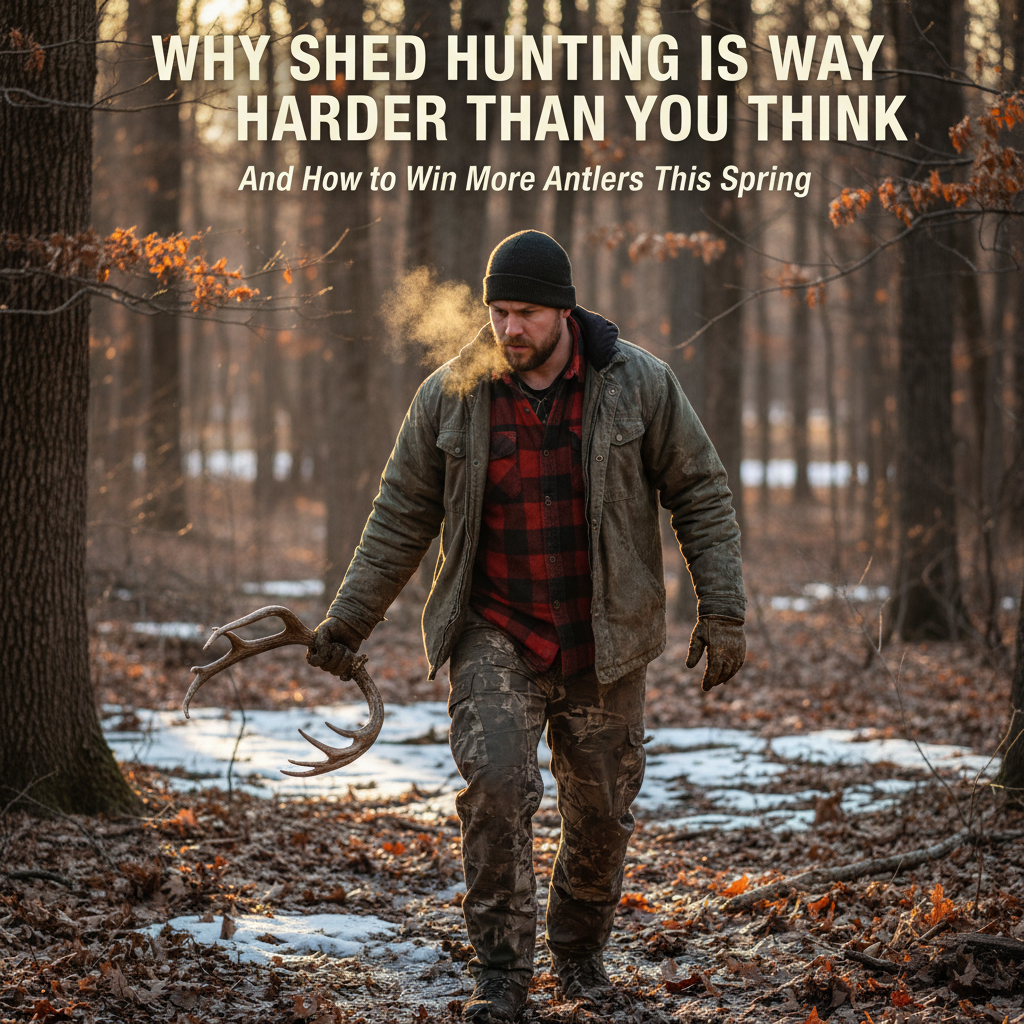
Shed hunting looks simple on paper: hit the woods in late winter or early spring, walk a few fields, and boom — antlers in hand. Right? Not even close.
The brutal reality is this: most guys blank. They spend hours grinding through snow, brush, and cut cornfields only to come home empty-handed — puzzled why the trophies didn’t jump out at them. The truth is, shed hunting is a true hunting discipline — raw, gritty, and often humbling — and most hunters just aren’t prepared for what real success demands.
The Myth: Shed Hunting Is Easy
At first glance, shed hunting appears simple: stroll a few fields, circle bedding areas, and scoop up antlers. That assumption is everywhere — especially on social media. But seasoned shed hunters will tell you the same thing:
It’s not just walking. It’s skill, strategy, and blood-flow-to-the-boots effort.
Here’s the truth hunters learn the hard way: blank days are way more common than filled bags. You can put in serious miles and still find nothing — especially on pressured public land or property where everyone else is doing the same thing.
Hard Truth #1 — Mileage Matters More Than Luck
Experienced shed hunters often measure success by miles walked, not antlers collected.
Just like scouting for whitetails in the fall, shed hunting is about boots on the ground. You have to grind through miles of woods, brush, and fields — and even then you might end up with just a few horns to show for it.
But don’t get discouraged. The guys finding sheds consistently aren’t getting lucky — they’re putting in relentless effort and reading the land like they read wind directions come opener.
Hard Truth #2 — Your Eyes Aren’t Trained… Yet
Antlers blend with the ground like camouflage in nature. In woodlots? They look just like sticks and roots. In fields? Corn stalks and residue look startlingly similar to shed beams.
That’s why beginners miss them. Your brain isn’t wired yet to spot antler shapes in chaos. It takes repetition, focus, and slow scanning — just like sight-fishing bass or glassing for bucks in thick timber. Over time, your eyes begin to lock onto the subtle cues — the right shadows, curves, and textures — that reveal a shed horn from a stick.
Hard Truth #3 — Most People Hunt the Wrong Spots
Here’s where many hunters get it backwards: they hit obvious food plots and easy trails first. But deer aren’t dropping antlers where you think they are — they’re dropping them where bucks spent the most time in late season.
That means bedding areas, transition corridors, and hidden travel routes between food, water, and shelter. Those are the hotspots where bucks slow down, shuffle through thick cover — and lose antlers.
Game-Changing Shed Hunting Strategies
Instead of wandering aimlessly, treat your shed hunt like scouting for the fall:
1. Time It Right
Spring is key — once most bucks have dropped both antlers, you’ll have a window where everything becomes fair game. Cold snaps, snow cover, and late melts can delay this, so watch local conditions and trail cam intel.
2. Target Bedding & Transition Areas
Food sources are fine… but bedding areas, travel funnels, and edges between cover and feeding zones often produce the best finds. These are spots bucks moved through when they dropped antlers.
3. Slow Down — Scan Hard
Speed kills when you’re hoping to find sheds. Use polarized sunglasses, take small steps, and scan every handful of brush. Think quality over quantity.
4. Keep a Hunting Journal
Track dates, locations, conditions, and what you find. Patterns emerge year over year — like when certain bucks drop antlers and where they hang out the most.
5. Respect Land Access
Permission isn’t optional — it’s mandatory. Private landowners have a right to their property and the sheds on it. Always get permission before you go.
Why Shed Hunting Still Rules
Despite the grind, shed hunting is one of the most rewarding parts of the hunting year. It extends your season, gets you in the woods when most people are still dreaming of fall, and gives you real intel on what bucks made it through winter.
Plus — let’s be honest — nothing beats the satisfaction of spotting that first tine poking out of the grass after hours of hard walking.
Summary — Shed Hunting Success Isn’t Simple, It’s Strategic
If you walk out expecting antlers to fall into your hands — you’re setting yourself up to blank. Real success comes from:
✅ Putting in miles
✅ Training your eyes
✅ Learning deer patterns
✅ Hunting smart, not easy
That’s why shed hunting can be far harder than it should be… but also infinitely more rewarding for the hunters who decide to master it.