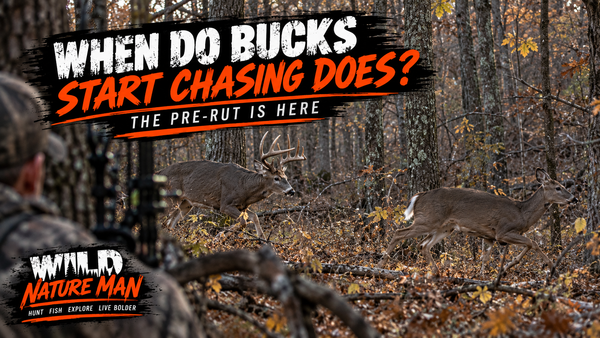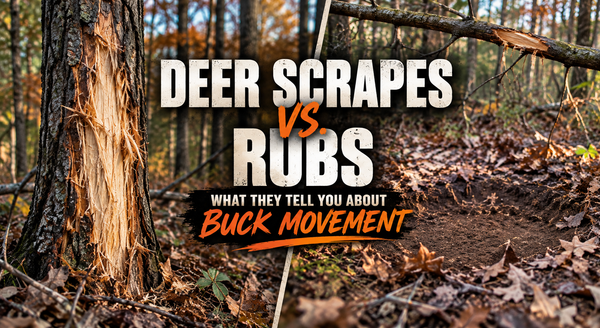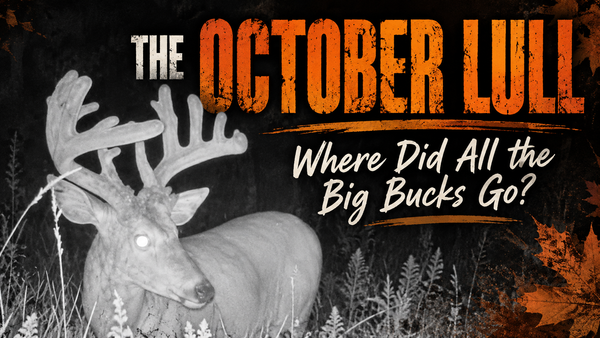
2026 Whitetail Rut Forecast: Best Days, Times, and Places to Hunt Mature Bucks.
November is here, and mature bucks are starting to make mistakes. Here's when to hunt the 2026 whitetail rut, where to set up, and how to capitalize on the most anticipated weeks of deer season.
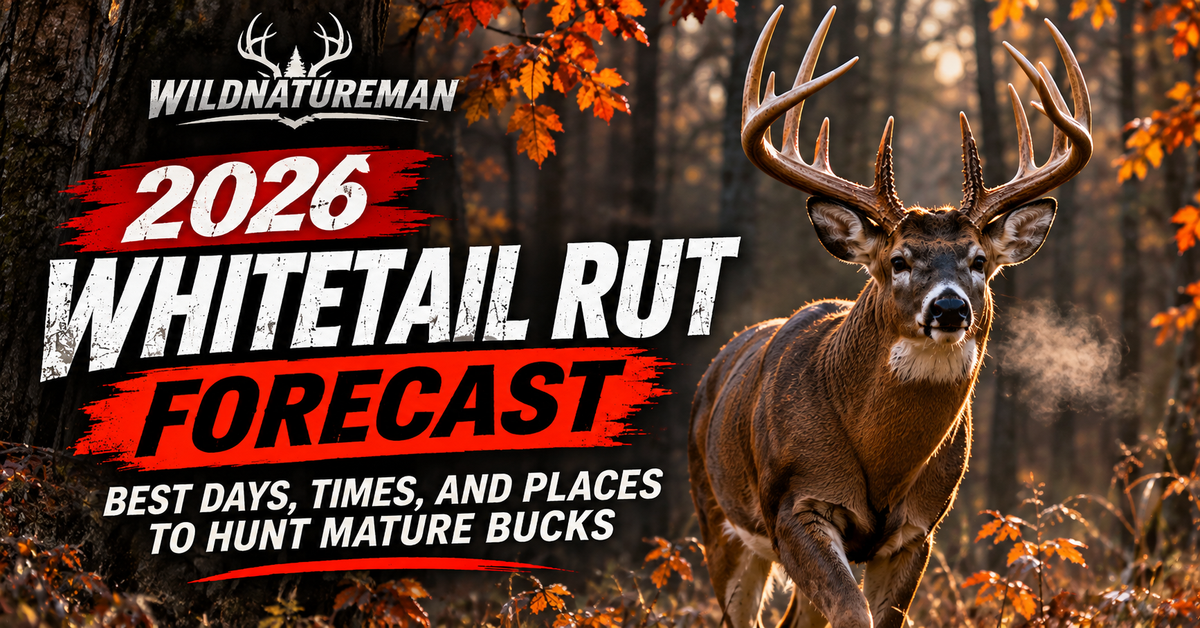
The 2026 deer rut is here. If you're hunting Michigan, the Midwest, or anywhere in northern whitetail country, these next few weeks could provide your best opportunity of the entire season. But only if you understand what actually makes mature bucks move.
Every November, deer hunters across America become obsessed with one question:
When is the best day to hunt the rut?
Some hunters swear by November 7. Others circle November 10, November 12, or the first major cold front of the month.
Social media fills up with rut predictions. Hunting forums explode with trail camera pictures. Everyone seems convinced they've identified the exact day mature bucks will lose their minds.
But here's something I've learned spending countless hours hunting Michigan whitetails, including heavily pressured public land:
You can hunt the perfect rut date and still be sitting in the wrong tree.
The rut doesn't magically make every mature buck run through the woods in daylight. It changes their priorities, expands their movements, and creates opportunities that simply don't exist during much of October.
The hunters who capitalize on those opportunities understand three things:
- When bucks are most likely to be searching for receptive does.
- Where that movement is likely to occur.
- How weather, wind, terrain, and hunting pressure influence whether a buck moves during legal shooting hours.
This guide breaks down the 2026 whitetail rut forecast, the best November hunting windows, where to find mature bucks, and how to hunt each phase of the rut.
And because I spend much of my time hunting Michigan, we're going to take a particularly close look at what these predictions mean for Midwest hunters and those grinding it out on public land.
When Is the Whitetail Rut in 2026?
For much of the northern United States, including Michigan, Wisconsin, Ohio, Indiana, Illinois, and Iowa, the primary whitetail breeding season occurs in November.
One published 2026 Midwest rut forecast estimates the broader rut window will run from November 7 through November 22.
That doesn't mean November 7 is the official start of breeding or that every doe will be bred by November 22.
Whitetails don't operate according to a calendar.
Breeding activity varies between individual deer, local populations, and geographic regions. Some does enter estrus earlier, others later, and some may cycle again if they aren't bred.
What remains relatively consistent in northern deer populations is the influence of changing day length.
As daylight decreases during autumn, hormonal changes help regulate reproductive behavior.
Weather may influence how much movement hunters observe, but a warm November afternoon doesn't suddenly cancel the biological breeding season.
The rut is driven primarily by biology. The movement you actually see is influenced by conditions.
That's an important distinction.
2026 Whitetail Rut Calendar: Michigan and the Midwest
The following dates are approximate hunting windows for much of the Midwest, not guaranteed biological milestones.
| Dates | Expected Activity | Hunting Approach |
|---|---|---|
| October 25–November 3 | Late pre-rut, increasing seeking activity | Hunt scrape corridors and travel routes near bedding |
| November 4–7 | Increasing buck cruising | Target funnels and downwind doe bedding edges |
| November 8–13 | Strong seeking and chasing opportunities | Prioritize long sits and high-traffic rut funnels |
| November 14–20 | Substantial breeding activity; possible lockdown periods | Hunt thick cover, doe concentrations, and transition corridors |
| November 21–30 | Later breeding activity and increased hunting pressure | Adapt to security cover and changing deer movement |
These windows can overlap. A hunter might witness intense chasing on November 3 and almost no visible movement on November 10.
That doesn't mean the forecast failed.
It means deer behavior is more complicated than a single date.
My advice: Don't plan your entire season around one magical day. Plan around a window, then let the conditions and fresh deer sign dictate your decisions.
Best Days to Hunt the 2026 Whitetail Rut
If I had to choose my hunting vacation around the 2026 rut in Michigan, I'd focus on November 7 through November 14.
Here's why.
This window falls within the period when many bucks are actively searching for does, and it comes immediately before Michigan's November 15 regular firearm opener.
For a bowhunter pursuing a mature buck on pressured public land, that timing matters.
You have a combination of increasing breeding-related movement and, in many locations, less concentrated hunting pressure than what arrives with firearm season.
That doesn't mean November 15 suddenly becomes a bad hunting day. Far from it.
But the way deer respond to increased human activity can change quickly.
November 2–6: The Opportunity Before the Chaos
Early November is a period I believe hunters consistently underestimate.
Some mature bucks are beginning to expand their movements. Scrapes may still provide useful clues about travel corridors, and bucks may begin checking multiple doe groups.
This is an excellent time to hunt the transition between a buck's established fall range and nearby doe bedding areas.
Where I would focus:
- Downwind sides of known doe bedding areas.
- Narrow timber corridors connecting cover.
- Creek crossings that naturally funnel movement.
- Ridge saddles between bedding locations.
- Fresh scrape lines located inside cover rather than exposed field edges.
The objective is not necessarily to sit directly over a scrape.
It's to understand why that scrape exists and what route a buck uses to reach it.
November 7–10: One of My Favorite Windows
If there's a period when I want to spend as much time in the woods as possible, this is it.
During the seeking phase, bucks may cover considerably more ground searching for receptive does.
A mature buck that rarely appeared during daylight in October may suddenly cross a travel corridor at 10:30 in the morning.
A buck from a neighboring property might appear in an area where you've never captured him on camera.
This is where funnels become incredibly valuable.
A funnel doesn't force a deer to travel through one exact spot. It simply concentrates potential routes through a smaller area.
Imagine two large bedding areas separated by a narrow strip of timber.
A buck traveling between those bedding areas has multiple reasons to use that strip, particularly if it provides cover and a favorable wind.
That's where I'd rather sit than randomly overlooking a massive open hardwood flat.
November 11–14: Stay in the Woods
This is another outstanding window to prioritize.
As breeding activity intensifies, some bucks will be tending receptive does while others continue searching.
That can produce frustratingly inconsistent movement.
You may sit for six hours without seeing a deer, then suddenly have a mature buck appear behind a doe in the middle of the day.
This is why I believe leaving the woods at 10 AM during November can be a costly mistake.
Not every hunter has the ability to sit all day. Work, family, and life don't stop because the deer are rutting.
But if you've taken vacation time specifically to hunt mature bucks, I would strongly consider staying through midday when you're positioned in a productive travel corridor.
November 15–20: Peak Breeding Meets Firearm Season
Michigan's regular firearm deer season opens November 15, 2026.
That introduces another major variable: hunting pressure.
In some areas, the increase in hunters can shift deer into thicker security cover or alter the routes they use during daylight.
At the same time, bucks may still be searching for and tending receptive does.
This creates an interesting dynamic.
A buck may be biologically motivated to move, but reluctant to expose himself in heavily disturbed areas.
For Michigan hunters, this is when overlooked cover, difficult access, and terrain features can become particularly valuable.
What Actually Triggers the Whitetail Rut?
Let's clear up one of the biggest misconceptions in deer hunting.
A cold front does not start the rut. Neither does a full moon.
In northern whitetail populations, decreasing daylight is the primary seasonal cue that helps regulate reproductive timing.
That biological process unfolds regardless of whether November temperatures are 30 degrees or 65 degrees.
However, temperature, wind, precipitation, and hunting pressure can affect when and where deer move.
That's why two days during the same rut phase can produce completely different hunting experiences.
Does Cold Weather Make Bucks Move More?
Cooler conditions can make daytime activity more favorable, particularly following unusually warm weather.
But cold temperatures are not a guarantee of movement.
A strong cold front paired with favorable wind and an undisturbed travel corridor may create an excellent hunting opportunity.
A cold front accompanied by extreme winds and heavy hunting pressure may produce disappointing results.
The important question isn't simply whether it's cold.
It's whether the conditions increase your chances of intercepting a buck along a route he's already likely to use.
Does Barometric Pressure Affect Deer Movement?
You'll hear hunters swear that deer move best at a particular barometric pressure.
The evidence for a universally reliable pressure threshold is limited.
Rather than building your entire strategy around a number on a weather app, pay attention to the broader weather pattern.
Look at temperature changes, wind direction, precipitation, and whether conditions allow you to access a stand without alerting deer.
Those variables are often more actionable than an isolated pressure reading.
Does the Moon Phase Affect the 2026 Rut?
The moon phase is one of the most debated topics in whitetail hunting.
Some hunters believe specific moon phases predict peak breeding or midday buck movement.
However, there is not strong evidence that moon phase reliably shifts the primary breeding peak in northern whitetails from year to year.
The photoperiod-driven reproductive cycle remains a better foundation for predicting seasonal rut timing.
My approach is simple:
I will not stay home during a promising November hunting window because a moon calendar says movement should be poor.
The Biggest Rut Hunting Mistake: Leaving Your Stand Too Early
Let's talk about something that frustrates me.
Hunters spend months preparing for November.
They scout. They hang stands. They study maps. They monitor cameras. They request vacation days.
Then they climb down at 9:30 or 10 AM because they haven't seen anything.
During October, that decision might make sense depending on the location and conditions.
During the November rut, it's worth reconsidering.
Mature bucks may travel between doe bedding areas throughout the day, particularly while actively searching for receptive females.
A buck that was nowhere near your location at sunrise might travel through your area hours later.
Is Midday Deer Hunting Actually Worth It?
Yes, especially during active seeking and chasing periods.
That doesn't mean midday is always better than sunrise or sunset.
It means the opportunity for meaningful movement can extend well beyond the traditional morning and evening windows.
During November, I like the idea of dividing the day into three hunting periods.
Early morning: Sunrise to 9 AM
Focus on travel corridors near bedding areas and routes bucks may use while checking for does.
Midday: 9 AM to 2 PM
Look for movement through funnels, saddles, creek crossings, and areas connecting multiple doe groups.
Afternoon: 2 PM to sunset
Focus on bedding transitions, security cover, and routes deer may use as they begin moving toward evening feeding areas.
These aren't biological rules. They're practical ways to think about stand placement and changing movement opportunities.
A productive funnel may be worth hunting all day.
A stand that only offers an evening food-source approach might not be.
The point is to hunt with a purpose instead of simply accumulating hours in a tree.
Where Do Mature Bucks Go During the Rut?
This is the question I wish more hunters would ask.
Instead of obsessing over exactly which day the rut peaks, figure out where a mature buck is likely to travel while searching for does.
In many cases, that means shifting your attention away from a specific buck's October routine.
During early season, you may have a mature buck consistently using a food source after dark.
By November, his movement may change considerably.
He may visit multiple doe bedding areas, travel unfamiliar routes, or spend time outside the small area where you've historically captured him on camera.
You need to adapt.
1. Downwind of Doe Bedding Areas
If bucks are searching for receptive does, areas holding does become natural points of interest.
A mature buck may approach a bedding area from the downwind side to investigate scent before exposing himself.
This creates an opportunity to position along a route he might use while checking the area.
But don't make the mistake of assuming that sitting directly downwind of bedding is automatically the correct move.
Your own scent, access route, thermals, and stand location still matter.
A buck may use a downwind checking route that is offset from the bedding area. You need to identify where that route intersects a huntable location without contaminating the cover.
2. Ridge Saddles
A saddle is a lower section along a ridge between two higher points.
In hill country, these features can provide convenient travel routes for deer moving across terrain.
They can also concentrate movement between larger blocks of cover.
I particularly like looking for saddles that connect bedding areas or offer a relatively concealed route across a ridge system.
But terrain funnels aren't automatic deer magnets.
Some saddles receive little movement. Others become excellent travel corridors because of nearby cover, food, and bedding.
Scout the actual sign before committing.
3. Creek Crossings
Creeks can create natural travel bottlenecks.
Look for shallow crossings, established trails, and locations where steep banks limit the number of easy routes.
A crossing that connects two areas of security cover can be especially interesting during the rut.
However, pay close attention to your access.
If you walk directly through the crossing every time you enter your stand, you may be educating the very deer you're trying to intercept.
4. Thick Cover Between Doe Groups
Some of the best rut locations don't look impressive on a map.
They may be narrow strips of brush, overgrown logging cuts, swamp edges, or tangled transition areas between mature timber and young growth.
These locations provide security.
On pressured public land, security can be just as important as the terrain feature itself.
A mature buck traveling between doe groups may prefer a route that allows him to remain concealed.
5. Overlooked Terrain Near Hunting Pressure
Here's where things get interesting.
A lot of hunters assume the deepest, most remote section of public land automatically holds the biggest bucks.
Sometimes it does.
But mature bucks may also use overlooked pockets of cover surprisingly close to roads, parking areas, or heavily traveled access routes.
The important factor isn't simply distance from people.
It's how human activity influences deer movement and where deer can find security.
A small, thick bedding pocket that hunters routinely walk past can sometimes be more valuable than a beautiful hardwood ridge two miles from the truck.
How to Hunt the 2026 Rut on Michigan Public Land
Michigan public-land hunting presents a unique challenge.
You aren't the only person studying the map.
Other hunters are identifying the same ridges, swamps, creek bottoms, and bedding areas.
And when November arrives, hunting pressure can intensify quickly.
I've spent time scouting and hunting northern Michigan public land, including areas in Alpena County where thousands of acres are available to explore.
One thing that stands out is how easily an area that looks remote on a map can still receive substantial human traffic.
Logging roads, two-tracks, access points, and convenient parking areas make large sections of public land more accessible than they initially appear.
That's why I believe successful public-land rut hunting requires more than walking farther.
It requires understanding how deer use terrain and how hunters use access.
Start With the Map, Not the Parking Lot
Before entering a new area, I like using digital mapping tools such as onX Hunt to identify terrain features and possible access routes.
I'm looking for:
- Bedding cover that may hold does.
- Narrow corridors between large blocks of habitat.
- Saddles and terrain transitions.
- Swamp edges and wetland crossings.
- Public and private property boundaries.
- Roads and two-tracks that may increase human access.
- Alternative entry routes that reduce disturbance.
The goal isn't to find the prettiest piece of woods.
It's to identify locations where deer have a reason to travel and where I can realistically intercept them.
Don't Automatically Hunt the Deepest Timber
One of the biggest mistakes public-land hunters make is equating difficulty of access with quality of hunting.
Walking three miles into the woods doesn't guarantee you're hunting better deer movement.
Sometimes you're simply three miles from the truck.
I would rather hunt a strong funnel 600 yards from the road than sit in a random location two miles deep.
Distance can help reduce pressure, but only when it leads you into productive habitat.
Use Hunting Pressure to Your Advantage
Human pressure can influence where deer seek security and which travel routes they use.
During Michigan's firearm season, that becomes especially relevant.
Think about where other hunters are likely to enter.
Then consider the cover deer may use to avoid those routes.
A thick swamp edge or overlooked transition corridor may become more valuable when nearby access routes are busy.
This isn't about intentionally pushing deer toward other hunters or using unsafe setups.
It's about recognizing that deer respond to disturbance and adjusting your hunting strategy accordingly.
Keep Multiple Stand Locations Available
I don't believe a serious public-land hunter should rely on one stand location during November.
Wind direction changes.
Other hunters show up.
Deer movement shifts.
A location that was excellent yesterday may be compromised today.
Ideally, I want several options that allow me to adapt without forcing a bad wind or walking through bedding cover.
Flexibility is a major advantage during the rut.
How to Hunt the Rut When Bucks Stop Showing Up on Trail Cameras
This is one of the most frustrating parts of deer season.
You've watched a mature buck on camera for weeks.
You know his approximate routine.
You know when he visits a scrape or feeding area.
Then November arrives, and he disappears.
What happened?
There are several possibilities.
He may have expanded his range while searching for receptive does.
He may be spending time with a doe in an area outside your camera coverage.
He may have changed travel routes because of hunting pressure.
Or he may still be nearby but moving through areas your cameras don't monitor.
A buck disappearing from your camera doesn't necessarily mean he's gone.
Trail cameras only document movement through a limited field of view.
They don't tell you everything happening across a property or public-land section.
Should You Move Your Stand?
Not automatically.
If you're positioned along a strong rut funnel connecting doe bedding areas, the disappearance of one specific buck may not justify abandoning the location.
You could intercept another mature buck that wasn't previously using the area.
However, if your stand depends entirely on an October feeding pattern that has clearly changed, it may be time to reconsider.
The question is whether your location still matches the behavior you're trying to intercept.
During November, I become less interested in hunting one particular camera picture and more interested in hunting the routes bucks are likely to use.
Understanding the Rut Lockdown: Why Deer Movement Can Suddenly Disappear
There's a strange period during the rut when hunters sometimes report seeing fewer bucks.
It can feel like the woods have gone completely dead.
This is often described as the rut lockdown.
During peak breeding activity, a buck may spend considerable time tending a receptive doe rather than continuously searching for another.
If that pair remains in thick cover, visible movement can decrease.
This can make hunting frustrating.
You may be sitting in an excellent area during the primary breeding period and still see very little.
How Do You Hunt Rut Lockdown?
First, don't assume the rut is over.
Consider focusing on:
Thick security cover: Receptive does and tending bucks may spend time in areas that provide concealment and reduced disturbance.
Transitions between bedding areas: Bucks that finish tending one doe may begin searching for another.
Travel corridors connecting doe concentrations: These routes can remain productive as different bucks move between receptive females.
Fresh observations: Tracks, sightings, camera activity, and current deer behavior should carry more weight than a rigid calendar prediction.
During lockdown, patience becomes especially important.
A buck might remain out of sight for long periods before suddenly becoming mobile again.
The challenge is staying positioned where that movement can create an opportunity.
Grunt Calls, Rattling, and Decoys: What Works During the Rut?
November is when many hunters start experimenting more aggressively with calling.
Grunt tubes, rattling antlers, bleat calls, and decoys can all have a place in a rut strategy.
But none of them are guaranteed to attract a mature buck.
Grunt Calls
A grunt call can imitate buck vocalizations and potentially draw the attention of a nearby deer.
I prefer starting conservatively.
If I see a buck moving out of range and believe he's unlikely to approach naturally, a grunt may be worth trying.
But I don't assume every buck will respond.
Some ignore calls completely.
Others may approach cautiously, trying to circle downwind before committing.
Rattling
Rattling attempts to imitate bucks sparring or fighting.
It can be particularly appealing during periods when bucks are actively competing for access to does.
The effectiveness varies by location, deer density, hunting pressure, and the individual buck.
On heavily pressured public land, I would be cautious about excessive calling.
Aggressive rattling can attract attention, including unwanted attention from other hunters.
Doe Bleats
Doe bleats can be useful in certain situations, particularly when bucks are actively searching.
As with other calling techniques, context matters.
I would rather use a call to influence a specific situation than blindly call every few minutes.
The Most Important Calling Rule
Don't let calling replace good stand placement.
A grunt tube won't fix a stand positioned in the wrong location.
Rattling won't eliminate your scent.
And a decoy won't compensate for walking directly through a bedding area.
Get the fundamentals right first.
Best Weather Conditions for Hunting the November Rut
If I'm planning several days of hunting, weather is one of the first things I'll evaluate.
Not because weather determines when breeding occurs, but because it influences comfort, access, scent movement, and potentially the timing of visible deer activity.
Cold Fronts
A meaningful temperature drop following warm conditions is worth paying attention to.
If that front also produces a wind direction that allows me to hunt a productive funnel, I'll be interested.
But I won't automatically choose a poor stand simply because temperatures are falling.
Wind Direction
Wind is one of the most important practical variables in my hunting decisions.
I want a wind that allows me to hunt a likely deer travel route without sending my scent into bedding cover or directly across the route I'm watching.
In complex terrain, thermals and shifting winds can complicate that plan.
That's why actual conditions at the stand matter more than relying entirely on a regional weather forecast.
Rain
Light rain doesn't automatically ruin a hunt.
Deer can remain active in wet conditions, and movement may increase as severe weather passes.
Heavy rain, strong winds, and storms can make hunting more difficult and may create safety concerns.
Never compromise safety simply because the calendar says it's a good rut day.
Warm November Weather
Warm weather can make hunting uncomfortable and may influence when deer are most visibly active.
But don't make the mistake of thinking the rut has stopped.
Bucks still respond to receptive does.
A warm afternoon may be less appealing than a crisp November morning, but it isn't a reason to abandon an otherwise promising location.
Morning vs. Evening: When Should You Hunt the Rut?
If you're hunting early October, evening sits near food sources can be extremely productive.
But during November, I begin placing greater emphasis on morning and midday opportunities near bedding areas and rut travel corridors.
Here's how I think about it.
Morning Hunting
Morning hunts can be excellent when bucks are returning toward cover or checking bedding areas for receptive does.
The challenge is getting into position without disturbing deer.
An aggressive morning setup can be incredibly effective when access is clean.
It can also ruin a location if you walk through the area deer are already using.
Evening Hunting
Evening hunts still have value.
Does may move toward food, and bucks may follow or investigate those areas.
But on pressured land, mature bucks may remain inside cover until after legal shooting hours.
Rather than sitting directly over an exposed field, consider identifying a staging or transition area where deer may pass earlier.
All-Day Hunting
For a productive rut funnel, an all-day sit can be worth the effort.
Bring water, food, appropriate clothing, and whatever you need to remain alert and comfortable.
But don't confuse sitting all day with hunting effectively.
If the location is poor or the wind becomes unfavorable, remaining in the stand longer doesn't necessarily improve your odds.
The best time to hunt is when deer are likely to use your location and you can hunt it without alerting them.
My Personal Strategy for the 2026 Michigan Rut
If I were organizing my remaining November hunting time around the rut, here's how I would approach it.
Step 1: Identify Three Productive Areas
I would want at least three locations with different advantages.
One near doe bedding.
One along a strong terrain funnel.
And one overlooked security-cover location that could become productive when hunting pressure increases.
Step 2: Match Each Location to the Wind
Before choosing where to hunt, I'd evaluate wind direction and access.
A great location with the wrong wind is often better saved for another day.
Step 3: Hunt the First Half of November Aggressively but Intelligently
From November 7 through November 14, I would prioritize the best conditions and spend more time hunting travel corridors.
That doesn't mean recklessly pushing into every bedding area.
It means being willing to hunt locations I've been saving when the opportunity justifies the risk.
Step 4: Stay Flexible
If fresh sign or deer sightings suggest movement has shifted, I'd adjust.
If another hunter compromises an access route, I'd use a backup location.
If a buck begins regularly using a different corridor, I'd evaluate whether I can intercept him without ruining the area.
Step 5: Don't Waste the Midday Opportunity
On my highest-confidence rut locations, I'd strongly consider remaining through midday.
I've learned that successful deer hunting often requires staying patient when the woods seem completely inactive.
November is no time to assume the morning hunt is over simply because the clock hits 10.
Michigan Deer Hunting Dates for 2026
Michigan hunters should be aware of the following official season dates.
| Season | 2026 Dates |
|---|---|
| Early archery | October 1–November 14 |
| Regular firearm | November 15–30 |
| Late archery | December 1–January 1, 2027 |
| December firearm, Lower Peninsula | December 4–6 |
| Muzzleloader, Upper Peninsula | December 4–6 |
These dates come from the Michigan Department of Natural Resources.
Hunters should verify all applicable regulations, licensing requirements, equipment restrictions, legal hunting hours, and local rules before heading afield.
Michigan also prohibits baiting throughout the Lower Peninsula, subject to limited exceptions for qualifying hunters during specified special hunts.
The 2026 season includes other regulatory changes, so don't assume last year's rules still apply.
Official resource: https://www.michigan.gov/dnr/managing-resources/laws/regulations/deer
2026 Whitetail Rut Frequently Asked Questions
When will the whitetail rut peak in Michigan in 2026?
Much of Michigan's primary breeding activity is expected to occur during November, with one published forecast identifying November 7–22 as the broader rut window. The exact timing varies locally and between individual deer.
What are the best days to hunt the 2026 rut?
For Michigan bowhunters, November 7–14 is a particularly appealing window to prioritize because of expected seeking activity and its timing before the regular firearm opener. However, there is no guaranteed best day.
Is November 10 a good day to hunt deer?
November 10 falls within a traditionally productive portion of the northern whitetail rut. It can be an excellent hunting day, especially when wind, weather, deer activity, and stand placement align.
What time of day do bucks move most during the rut?
Morning and evening can remain productive, but bucks may also travel during midday while searching for receptive does. The best time depends on the rut phase, habitat, hunting pressure, and location.
Should you sit all day during the rut?
An all-day sit can be worthwhile when hunting a productive funnel or travel corridor during active seeking periods. It is less useful when your stand location doesn't match current deer movement.
Do bucks move more during a cold front?
Cooler weather can coincide with increased visible activity, but cold fronts do not initiate the biological rut. Wind, temperature changes, hunting pressure, and habitat all influence what hunters observe.
Where should you hunt during peak rut?
Focus on doe bedding areas, downwind checking routes, terrain funnels, saddles, creek crossings, and secure travel corridors between doe concentrations.
Why do mature bucks disappear during the rut?
They may expand their range, follow receptive does, change travel routes, respond to hunting pressure, or spend time tending a doe in thick cover. Disappearing from a camera doesn't necessarily mean leaving the area.
Is public land good during the rut?
Absolutely. Public land can provide excellent rut hunting opportunities, especially where hunters identify productive habitat, understand terrain, and account for human pressure.
Does the full moon determine the rut?
There isn't strong evidence that a particular moon phase reliably controls peak breeding timing in northern whitetails. Seasonal daylight changes are a more reliable biological explanation.
Final Thoughts: Stop Hunting the Calendar and Start Hunting the Deer
Every November, hunters search for the perfect rut date.
They want the magic number.
The one day when mature bucks abandon every survival instinct and start running through the woods.
But the reality is more complicated.
The rut creates opportunity. It doesn't guarantee success.
A mature buck still needs a reason to travel through your area.
He still uses terrain.
He still responds to hunting pressure.
And he can still detect your scent.
The hunters who consistently put themselves in position aren't necessarily the ones with the most expensive equipment, the newest trail cameras, or the most elaborate rut prediction charts.
They're the ones who understand the habitat, recognize changing deer behavior, and make disciplined decisions.
For the 2026 Michigan rut, I'm especially interested in November 7–14.
But I won't be treating those dates like a promise.
I'll be watching the wind, studying terrain, paying attention to hunting pressure, and spending as much productive time in the woods as life allows.
Because sometimes the difference between another empty November sit and encountering the biggest buck of your season isn't a magical rut prediction.
It's being in the right place when that buck finally makes his mistake.
Good luck this November. Hunt smart, stay safe, and enjoy every opportunity you get to be in the woods.
WildNatureMan
Sources and Further Reading
- Michigan Department of Natural Resources — 2026 Deer Hunting Regulations: https://www.michigan.gov/dnr/managing-resources/laws/regulations/deer
- Michigan DNR — Hunting Season Calendar: https://www.michigan.gov/dnr/things-to-do/hunting/hunting-season-calendar
- Whitetail Forecast — Michigan Rut Dates 2026: https://whitetailforecast.com/michigan/rut-dates
- Whitetail Forecast — 2026 Rut Calendar by State: https://whitetailforecast.com/rut-calendar
Editor's note: Rut dates are approximate seasonal estimates, not guarantees of peak breeding or daytime movement. Local observations and current hunting conditions should guide stand selection.