When Do Bucks Start Chasing Does? Signs the Whitetail Rut Is Starting
When do bucks start chasing does? Discover when the whitetail pre-rut begins in Michigan, the signs of increased buck movement, and proven hunting strategies for late October and November. Learn where mature bucks travel and how to capitalize on the rut.

There's a point every October when the deer woods start feeling different.
Scrapes are getting worked. Fresh rubs are showing up along trails that were quiet a week ago. Trail cameras that were catching the same bucks after dark suddenly start picking up deer at different times.
And then it happens.
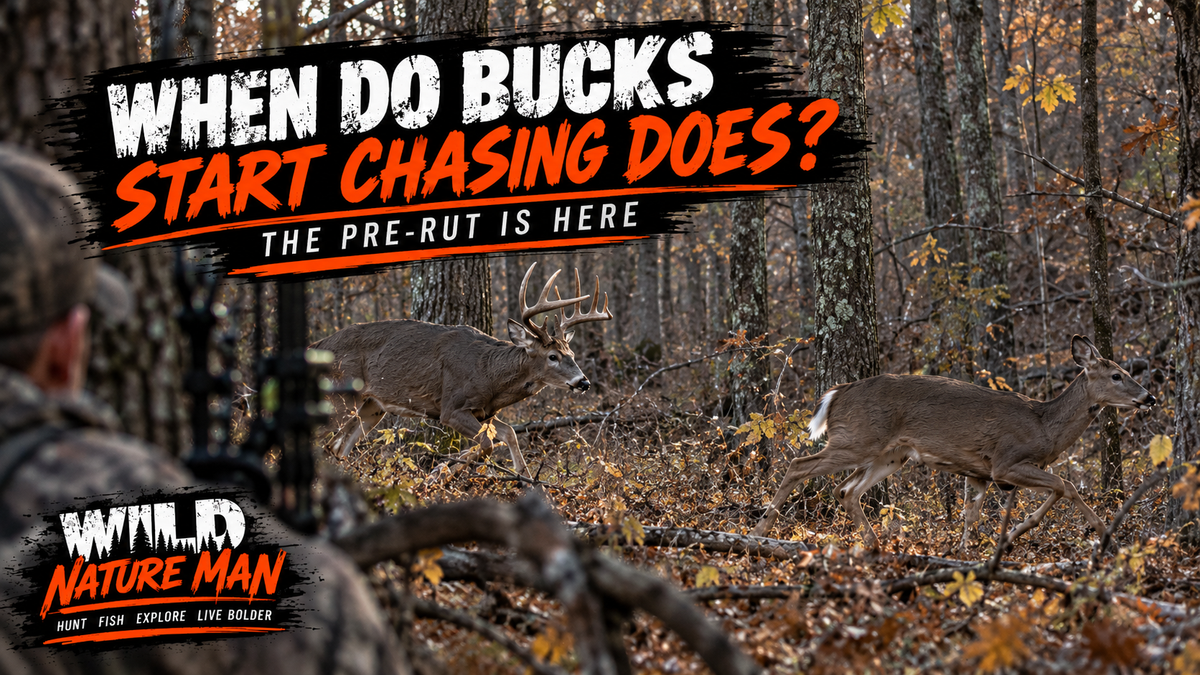
A doe comes flying through the timber with a buck right behind her.
Now you're wondering the same thing thousands of deer hunters wonder every fall.
When do bucks start chasing does, and does that mean the rut has officially started?
For hunters in Michigan and much of the northern whitetail range, the answer generally falls somewhere between late October and early November. But there's a lot more to understanding the rut than circling a date on the calendar.
If you understand what triggers bucks to start searching for does, how their movement changes, and where they're likely to travel, you can make better decisions about when and where to hunt.
Let's break it down.
When Do Bucks Start Chasing Does?
Whitetail bucks typically begin showing noticeable chasing behavior in late October, with chasing activity increasing into early November across much of Michigan and the northern United States.
Some chasing happens earlier, particularly when the first does become receptive to breeding. However, seeing one buck chase a doe doesn't necessarily mean the entire deer herd has entered peak rut activity.
The timing of the whitetail breeding season is primarily controlled by photoperiod, which is the changing length of daylight as fall progresses.
As daylight decreases, hormonal changes prepare bucks and does for breeding.
This is why the rut generally occurs during a similar period every year, even when October temperatures are unusually warm or cold.
Weather can influence when you see deer moving, but it doesn't simply turn the rut on or off.
For Michigan hunters, late October is an important transition. Bucks that were following relatively predictable feeding and bedding patterns can begin expanding their movements as they search for receptive does.
That transition creates opportunities, particularly for hunters who understand where bucks are likely to travel.
When Does the Whitetail Rut Start in Michigan?
Michigan's whitetail breeding season generally occurs during October and November, with the most intense breeding activity commonly associated with November.
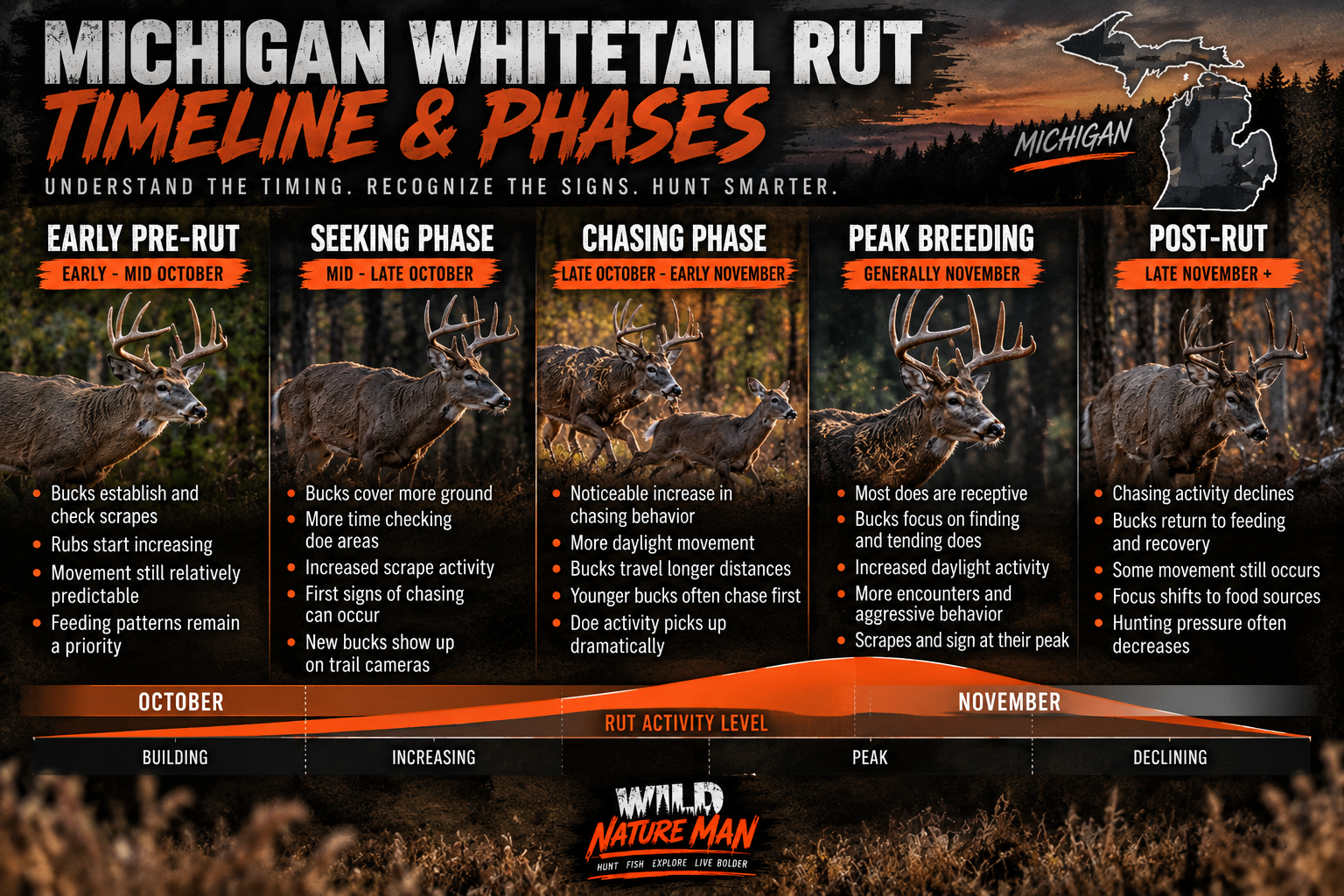
For hunting purposes, I like to think about the rut in several overlapping phases rather than one magical date.
| Rut phase | Approximate Michigan timing | What hunters may notice |
|---|---|---|
| Early pre-rut | Early to mid-October | Rubs, scrapes, and relatively predictable travel |
| Seeking phase | Mid to late October | Bucks checking doe areas and traveling farther |
| Chasing phase | Late October to early November | More visible pursuit of does and increased buck movement |
| Peak breeding | Generally November | Bucks finding and tending receptive does |
| Post-rut | Late November onward | Reduced chasing and greater emphasis on recovering energy |
These dates are general hunting windows, not exact biological boundaries. The phases overlap, and individual deer don't all follow the same schedule.
A buck might chase a doe in October while another buck in the same area continues his usual feeding routine.
That's part of what makes hunting the pre-rut so interesting.
Does the Rut Happen at the Same Time Every Year?
Generally, yes.
The timing is relatively consistent because changing daylight is the primary seasonal trigger.
That doesn't mean every November 5 will produce incredible deer movement.
Hunting pressure, available food, weather, terrain, and the number of receptive does can all influence what happens in front of your stand.
A warm afternoon might make deer movement less noticeable during shooting hours, but it doesn't mean the breeding season has been postponed.
Don't confuse a lack of visible deer movement with a lack of rut activity.
7 Signs Bucks Are Starting to Chase Does
Before you witness a buck running full speed behind a doe, there are usually other clues that the pre-rut is progressing.
Here are seven things I pay attention to.
1. Fresh Scrapes Are Showing Up
Scrapes are one of the most recognizable signs of whitetail activity.
Bucks create and investigate scrapes as part of their communication with other deer. These areas commonly include exposed soil beneath an overhanging licking branch.
As the breeding season approaches, some scrapes receive increased attention.
But here's something important.
A freshly worked scrape doesn't guarantee a mature buck will visit it during daylight.
Scrapes are pieces of information, not automatic stand locations.
You still need to understand nearby bedding cover, travel routes, wind direction, and hunting pressure.
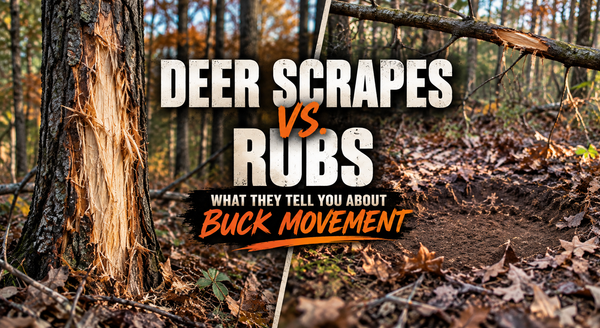
I've covered this in more detail in my article Deer Scrapes vs. Rubs: What They Reveal About Buck Movement.
2. Bucks Begin Traveling Outside Their Normal Patterns
This is one of the changes that gets my attention.
A buck that spent September and early October traveling between a bedding area and food source may begin covering additional ground.
Instead of focusing entirely on feeding, he's increasingly interested in locating receptive does.
You might notice new bucks appearing on trail cameras or familiar bucks showing up at different times.
That doesn't necessarily mean a buck has abandoned his home range.
He may simply be expanding his movements within it or making temporary excursions into surrounding areas.
3. Does Start Acting Nervous
Sometimes the best indicator of approaching rut activity isn't the buck.
It's the doe.
If you see a doe moving quickly through the woods, repeatedly looking behind her, or behaving differently from the rest of a group, pay attention.
There could be a buck following her.
This is especially important when hunting travel corridors or areas near doe bedding cover.
Don't immediately assume the woods are empty after a doe passes your stand.
Keep watching.
4. Younger Bucks Start Chasing First
One of the first noticeable signs of the chasing phase can be younger bucks pursuing does that aren't yet receptive.
These encounters can look dramatic.
A doe may run across a field or through timber while a young buck follows closely behind.
But not every chase leads to breeding.
Some bucks are responding to increasing hormones and reproductive interest before a doe is ready to mate.
It's also important not to assume that mature bucks aren't active simply because you haven't seen them chasing.
Older bucks may behave differently, and their movements can be harder to observe.
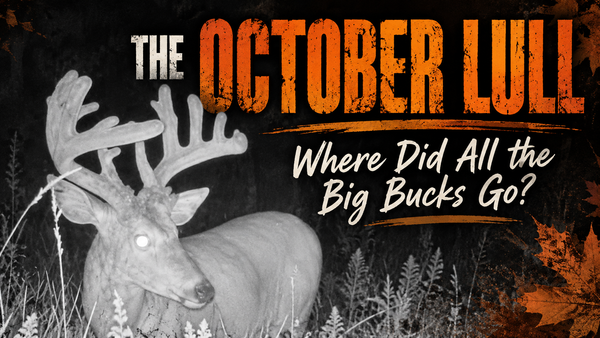
5. New Bucks Appear on Trail Cameras
Have you ever checked a camera in late October and discovered a buck you've never seen before?
That's one of the things I enjoy most about this time of year.
A camera that seemed predictable for weeks can suddenly produce an entirely different lineup of deer.
As bucks increase their search for receptive does, some move through areas they weren't regularly using earlier in the season.
This can be especially interesting on public land, where you may not have an extensive history with the deer you're hunting.
One caution: A single trail-camera photo doesn't prove a buck has permanently moved into an area.
Look for repeated sightings and patterns before making major changes to your hunting strategy.
6. Buck Activity Increases During Daylight
This is what many hunters are waiting for.
Mature bucks are often difficult to encounter during legal shooting hours, particularly in heavily pressured areas.
As breeding activity increases, some bucks spend more time traveling during daylight.
Research using GPS-collared bucks has documented increased movement during the rut, including more daytime activity in some study populations.
That doesn't mean every buck suddenly becomes careless.
It means the motivation to find receptive does can change the balance between avoiding risk and searching for breeding opportunities.
And that's exactly why late October and November can be such exciting periods to hunt.
7. You See Bucks Checking Multiple Doe Areas
As bucks begin searching for receptive does, locations with regular doe activity become increasingly important.
Think about the places where does feed, bed, and travel.
A buck may move between these areas, checking for potential breeding opportunities.
This is why I pay close attention to funnels and connecting cover rather than focusing exclusively on one scrape or rub.
The goal is to identify where bucks are likely to travel while searching, not just where they've already left sign.
Why Do Bucks Start Chasing Does?
The simple answer is reproduction.
But understanding the biology helps explain the behavior.
As fall daylight decreases, changes in reproductive hormones influence deer behavior.
Bucks become increasingly motivated to locate females approaching estrus.
Estrus is the period when a doe is receptive to breeding.
Not every doe enters estrus at exactly the same time, which means bucks must search for breeding opportunities throughout the season.
During this period, bucks may:
- Expand their travel patterns.
- Investigate scrapes and scent.
- Visit areas with concentrations of does.
- Compete with other bucks.
- Pursue receptive or nearly receptive does.
- Spend extended periods tending a particular doe.
This last behavior is especially important.
A buck that's actively searching may cover significant ground.
But once he finds a receptive doe, he may remain close to her for an extended period.
That's one reason hunters sometimes experience incredible buck movement followed by a couple of seemingly quiet days.
The deer haven't necessarily disappeared.
Their priorities have changed.
Where Should You Hunt When Bucks Start Chasing Does?
Knowing when bucks begin chasing is useful.
Knowing where to position yourself is what can turn that information into a successful hunt.
Here are the areas I'd prioritize.
1. Travel Corridors Between Doe Bedding Areas
This is one of my favorite concepts for hunting the pre-rut.
Instead of sitting directly over a scrape, look for natural travel routes connecting areas that regularly hold does.
Bucks searching for receptive females may use these routes as they move through the property.
Potential locations include wooded strips, narrow creek crossings, saddles, and transitions between thick cover and more open timber.
On public land, these features can become even more valuable because they help narrow down a large area into specific travel opportunities.
2. Downwind Edges of Doe Bedding Cover
Bucks rely heavily on scent.
During the seeking phase, a buck may travel along the downwind side of bedding cover while investigating whether receptive does are nearby.
This doesn't mean every downwind edge is a guaranteed hotspot.
Terrain, wind direction, access, and pressure still matter.
I prefer locations where the wind and terrain create a reasonable travel opportunity without requiring me to disturb the bedding area.
3. Funnels and Pinch Points
If bucks are covering more ground, why not hunt somewhere that naturally concentrates their movement?
That's the logic behind hunting funnels.
A funnel can be created by terrain, water, thick vegetation, or other features that restrict available travel routes.
Examples include a narrow strip of timber between fields, a dry crossing through a swamp, or a saddle connecting two ridges.
The key is finding a location deer already have a reason to use.
4. Fresh Sign Near Secure Cover
Fresh rubs and scrapes can help identify areas worth investigating.
But I wouldn't build an entire hunting strategy around one impressive rub.
Look at the surrounding landscape.
Is there bedding cover nearby?
Does the area connect to feeding locations?
Can you access it without walking through the routes deer are likely to use?
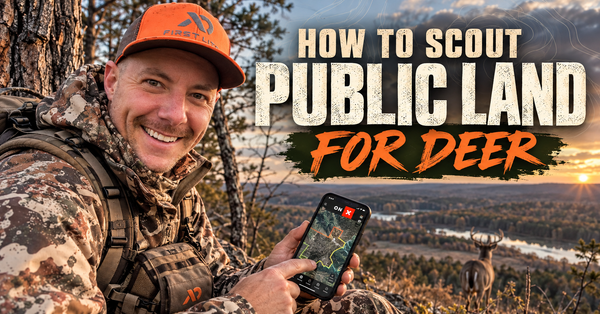
If you haven't read it yet, my guide on How to Scout Public Land for Deer explains how I approach scouting large areas without assuming the best hunting is always miles from the road.
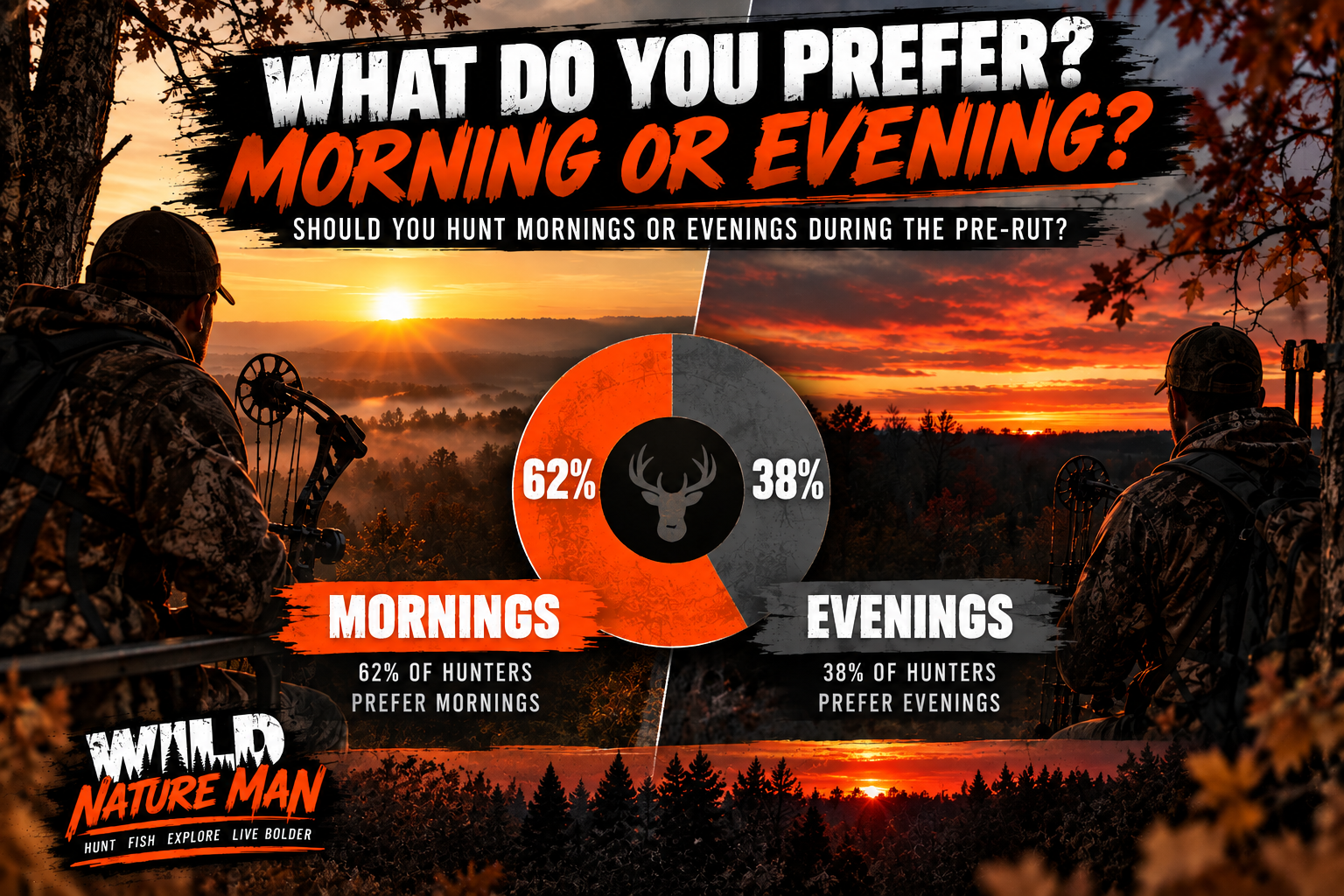
Should You Hunt Mornings or Evenings During the Pre-Rut?
I think this depends heavily on the location you're hunting.
Earlier in October, evening hunts near feeding areas can be productive because deer may still follow relatively consistent feeding patterns.
As bucks begin searching for does, morning hunts near travel corridors and bedding cover can become increasingly interesting.
A buck returning from a nighttime search may pass through a funnel after sunrise.
That said, I wouldn't automatically abandon evening hunting.
If cameras, fresh sign, or direct observations suggest deer are moving through a location during the afternoon, that information matters more than a generic rule.
What About Midday Hunting?
As the rut progresses, midday movement can become more relevant.
Bucks searching for receptive does don't necessarily restrict all their travel to dawn and dusk.
If I have confidence in a travel corridor and can get into position without disturbing deer, I'd consider staying longer rather than automatically climbing down midmorning.
But I also believe in being realistic.
An all-day sit in a poor location is still an all-day sit in a poor location.
Location matters.
Should You Use a Grunt Call or Rattling Antlers During the Pre-Rut?
Calling can become more useful as bucks enter the seeking and chasing phases.
A grunt call may get the attention of a nearby buck, while rattling can imitate a confrontation between competing bucks.
But I don't believe more calling automatically means better hunting.
In heavily pressured areas, aggressive or unrealistic calling can create problems.
My approach would be to start conservatively.
Use calling when you have a reason to believe a buck is nearby, pay attention to how deer respond, and avoid turning every hunt into a nonstop calling session.
Remember that a buck may approach cautiously, circle downwind, or ignore the call entirely.
There is no sound that guarantees a response.
Do Cold Fronts Make Bucks Start Chasing Earlier?
This is a common question.
A strong cold front can make hunting conditions feel dramatically different.
Temperatures drop. The wind changes. Deer may become more visible during daylight.
But a cold front doesn't fundamentally reset the biological breeding calendar.
Photoperiod is the primary seasonal driver of the rut. Weather influences the conditions under which hunters observe deer activity.
That distinction matters.
If a cold front arrives during the late-October seeking phase, it may create favorable conditions for encountering a moving buck.
But that doesn't mean the cold front itself caused every buck in the area to begin breeding.
The same logic applies to warm weather.
Warm temperatures may influence visible activity, but the breeding season continues.
Does Hunting Pressure Affect Pre-Rut Buck Movement?
Absolutely, and this is something I think hunters underestimate.
A mature buck may have every biological reason to search for receptive does while still responding to human disturbance.
On public land, especially in Michigan, hunting pressure can influence where and when deer feel comfortable traveling.
That's why I spend time looking for overlooked areas.
Thick cover. Difficult access. Terrain features that discourage casual foot traffic. Places that other hunters walk past because they don't look impressive from the road.
Sometimes a productive location is a long walk from the truck.
Other times it's surprisingly close.
Distance alone doesn't make a hunting spot good.
Understanding deer movement and human pressure is much more valuable.
Common Mistakes Hunters Make During the Pre-Rut
Waiting for a Perfect Rut Date
There is no single day that guarantees mature buck movement.
Use the calendar as a guide, but pay attention to what deer are actually doing.
Hunting Every Fresh Scrape
A scrape can be active without receiving meaningful daytime visits.
Look for travel patterns and surrounding habitat.
Ignoring Does
If bucks are searching for receptive females, understanding doe movement becomes extremely important.
Changing Stand Locations Too Often
Fresh information is valuable, but constantly entering bedding cover or disturbing travel corridors can work against you.
Assuming Warm Weather Means the Rut Has Stopped
Warm weather doesn't cancel the breeding season.
It may simply change when and where you observe movement.
Giving Up Too Early
A slow morning doesn't necessarily mean the entire day will be slow.
Especially as November approaches, remaining patient in a well-chosen location can be worthwhile.
Frequently Asked Questions About Bucks Chasing Does
What month do bucks start chasing does?
Across much of Michigan and the northern United States, noticeable chasing often begins in late October and increases into early November. Timing varies by region and individual deer.
Can bucks chase does in early October?
Yes. Some chasing can happen earlier than the main chasing phase, but isolated encounters don't necessarily indicate widespread breeding activity.
Do mature bucks chase does before younger bucks?
There is no universal sequence that applies to every deer. Younger bucks may engage in obvious, unsuccessful chasing, while mature bucks can use different searching and tending strategies.
How long does the chasing phase last?
There isn't a fixed duration. Seeking, chasing, and breeding behaviors overlap over several weeks as different does become receptive.
Do bucks chase does during the day?
Yes. Chasing can occur during daylight or nighttime. Rut-related movement can create additional opportunities for hunters to encounter bucks during legal shooting hours.
Does a cold front trigger the rut?
No. Seasonal changes in daylight are the primary driver of breeding timing. Cold fronts can influence deer activity and how visible that activity is to hunters.
What is the best time to hunt bucks during the pre-rut?
Morning travel corridors, evening routes near feeding areas, and funnels connecting doe habitat can all be productive. The best choice depends on local deer movement, wind, access, and hunting pressure.
Do bucks stop eating when they start chasing does?
Bucks can reduce the time they spend feeding while actively searching for or tending receptive does, but they don't completely stop needing food.
Final Thoughts: Don't Wait Until November to Start Hunting the Rut
Here's what I want hunters to take away from this.
The rut isn't a switch that suddenly flips on November 1.
It's a progression.
Bucks begin changing their behavior as the breeding season approaches. They investigate sign, expand their movements, search for receptive does, and eventually begin chasing and breeding.
For Michigan hunters, late October is an excellent time to pay attention to those changes.
Don't get so caught up in waiting for the peak rut that you overlook what's happening right now.
Look for fresh sign. Pay attention to doe movement. Identify travel corridors. Understand the pressure around you.
And most importantly, spend time in the woods.
Because the buck you've been trying to figure out all season might already be starting to move.
Now I'm curious: What's the earliest you've ever witnessed a buck chasing a doe? Was it October, or did you have to wait until November?
Wild Nature Man | Hunt. Fish. Explore. Live Bolder.