October Lull Deer Hunting: Why Bucks Disappear & How to Find Them
Why do mature whitetail bucks disappear in October? Discover the truth behind the October lull, why buck movement patterns change, and how to find them when your trail cameras go quiet. Real hunting experiences, research, and practical tips to help you hunt smarter.

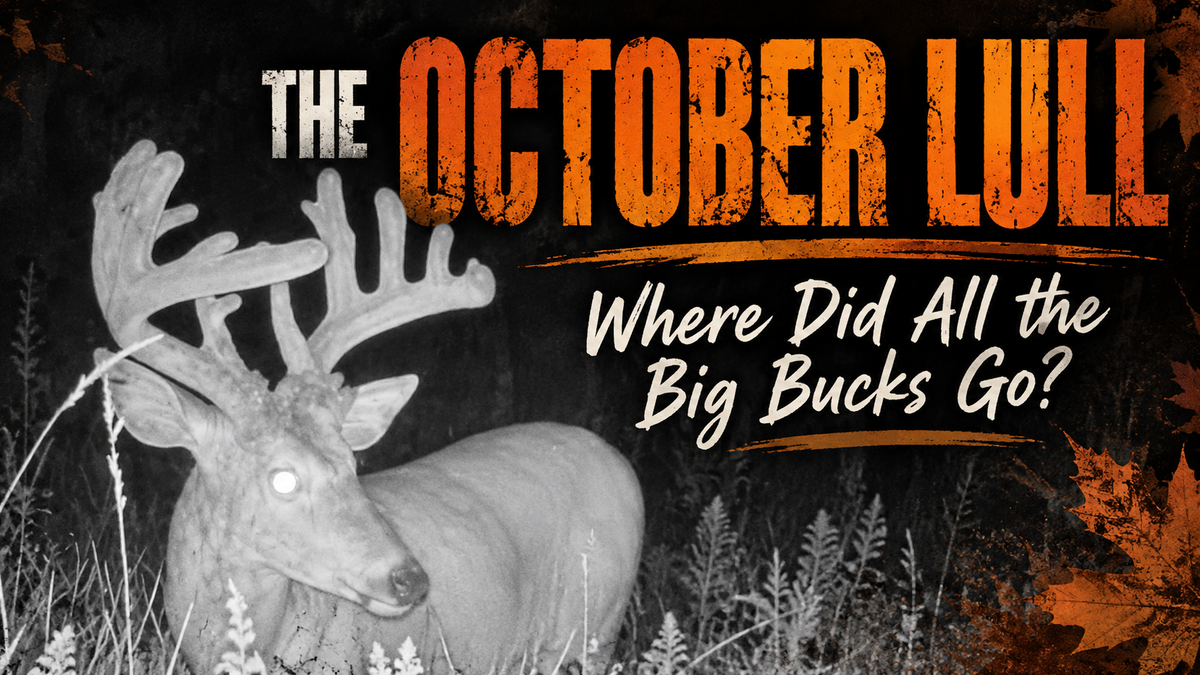
Every October, whitetail hunters across the country ask the same question: Where did all the big bucks go?
One week, your trail cameras are lighting up with mature bucks. You're getting daytime pictures, nighttime pictures, and consistent movement through the same travel corridors.
Then October rolls around, and those bucks seem to vanish.
Hunters call this the October lull, a period when mature whitetail sightings seem to drop off dramatically.
But here's what makes it interesting: Research suggests bucks don't necessarily stop moving in October. Their movement patterns, home ranges, food sources, and visibility to hunters can change.
And this season, I'm experiencing that firsthand.
Our Biggest Bucks Disappeared After October 3rd
This year, we had several mature bucks consistently showing up on our trail cameras.
And I'm not talking about the occasional picture of a decent buck passing through.
I'm talking about some absolute giants.
Throughout the summer and into September, we had their movements pretty well figured out. We knew their typical travel corridors, which parts of the property they were using, and roughly when they were moving.
Daytime pictures. Nighttime pictures. Consistent activity.
Everything seemed to be coming together.
If you've spent years chasing mature whitetails, you know how exciting that can be. All those months of scouting, studying maps, reviewing trail camera pictures, and trying to understand how a particular buck uses a property start to pay off.
You begin developing a plan.
You start imagining opening day.
And then October arrives.
As I'm writing this on October 13, 2026, we haven't had a single trail camera picture of either of those giant bucks since October 3rd.
Not one.
They were there. We knew where they were traveling. We knew when they were moving.
And now?
Nothing.
Did they leave the property? Did their food sources change? Did they shift their travel routes? Or are they still moving through the same general area, just outside the reach of our cameras?
I don't know.
And that's the frustrating part about chasing mature whitetails.
A Cold, Soaking-Wet Michigan Bow Opener
Michigan's October 1st archery opener wasn't exactly the beautiful fall day many hunters dream about.
The days leading up to opening day had been relatively warm and mild.
Then the weather changed.
Rain. Lots of rain.
I'm talking steady rainfall throughout much of the day, with periods of absolute downpours.
Temperatures were hovering around 50 degrees, a noticeable drop from what we'd been experiencing.
That temperature change had me excited.
Like many deer hunters, I pay attention to cold fronts and changing weather conditions. A noticeable drop in temperature is something I always consider when deciding when to hunt, even though temperature alone doesn't guarantee increased deer movement.
And I wasn't about to miss opening day because of a little rain.
Well, maybe more than a little.
I spent the majority of the day in the stand, getting soaked while watching the woods.
Around lunchtime, I finally headed inside to dry out, warm up, and enjoy a bowl of venison chili.
And let me tell you something.
There's nothing quite like a hot bowl of venison chili after spending hours sitting in cold rain.
It warms the soul.
After getting dried off and eating, I headed back into the woods.
Despite the weather, I actually saw quite a few deer throughout the day.
The deer were moving.
Just not the deer we had spent months anticipating.
Those mature bucks we had been watching all summer?
Nowhere to be found.
And as the days passed, the trail cameras remained quiet.
Which brings me to the question so many hunters ask this time of year.
Is the October lull real, or are we simply hunting where bucks used to be?
What Is the October Lull in Deer Hunting?
The October lull is a term hunters use to describe an apparent decline in deer sightings, especially mature bucks, during early and mid-October.
A buck that appeared regularly in September might suddenly disappear from trail cameras or stop showing up during daylight.
Many hunters attribute this to deer becoming nocturnal, increased hunting pressure, changing food sources, or warmer temperatures.
But here's the important distinction.
Seeing fewer deer doesn't necessarily mean deer are moving less.
You might be watching the wrong trail, hunting an outdated feeding pattern, or simply missing deer that have expanded their movements into other areas.
And there's some fascinating research that supports questioning the traditional October lull.
Is the October Lull Real? What Deer Movement Research Shows
Penn State's Deer-Forest Study has used GPS collars to examine how whitetail deer move throughout the year.
In research examining buck movements from late September into October, researchers found no evidence of the traditional October lull in the bucks they studied.
In fact, the tracked bucks expanded their home ranges as the season progressed.
That's worth thinking about.
Hunters were reporting fewer sightings during October, but the bucks being tracked weren't necessarily reducing their movements.
Some were covering more ground.
Additional Penn State research has shown that average daily buck movement increases as the breeding season approaches, particularly later in October and into November.
Now, this doesn't mean every deer behaves the same way.
Individual bucks, habitat conditions, available food, and hunting pressure can all influence what happens on a particular property.
But it does challenge the idea that mature bucks simply shut down during October.
And if you're staring at an empty trail camera card, that's something worth remembering.
Research: Penn State Deer-Forest Study, October Lull – Take 2 and Miles and Miles to Go.
5 Reasons Mature Bucks Seem to Disappear in October
1. Their Food Sources Change
One of the first things I consider when deer activity slows down is food.
Deer need to eat, regardless of what month it is.
But the places they're finding food can change significantly as summer transitions into fall.
During late summer, bucks might regularly visit agricultural fields, food plots, or other predictable feeding locations.
Then October arrives.
Acorns begin dropping. Agricultural crops are harvested. Natural browse changes.
Suddenly, a buck that was regularly visiting a field may have a completely different food source available.
And he might not need to travel nearly as far to reach it.
In Michigan, productive oak trees can be especially interesting to investigate during October.
But don't assume every oak tree is attracting deer.
Look for evidence that deer are actually feeding there.
Fresh tracks, disturbed leaves, droppings, and other recent sign can help identify active feeding locations.
My advice: Stop focusing entirely on where deer were eating in September. Find out where they're feeding today.
2. Hunting Pressure Changes Their Behavior
I think hunting pressure is one of the most important factors hunters need to consider.
And I'm not just talking about other hunters.
I'm talking about ourselves.
Think about how often you walk into the same stand.
Are you using the same access route every time?
Are you checking cameras too frequently?
Are you crossing deer trails or walking near bedding cover?
It's easy to become so focused on getting into our favorite hunting location that we overlook what our own activity might be doing.
A mature buck doesn't necessarily need to leave a property to become difficult to hunt.
He might change when he uses a particular trail.
He might spend more daylight hours in security cover.
Or he might begin avoiding an area where human activity has increased.
My advice: Study your entry and exit routes as carefully as you study deer movement.
Sometimes the problem isn't where your stand is located. It's how you're getting there.
3. Bucks Are Transitioning Toward the Rut
October is a transition period for whitetail bucks.
The bachelor groups that were common during summer begin breaking apart as fall progresses.
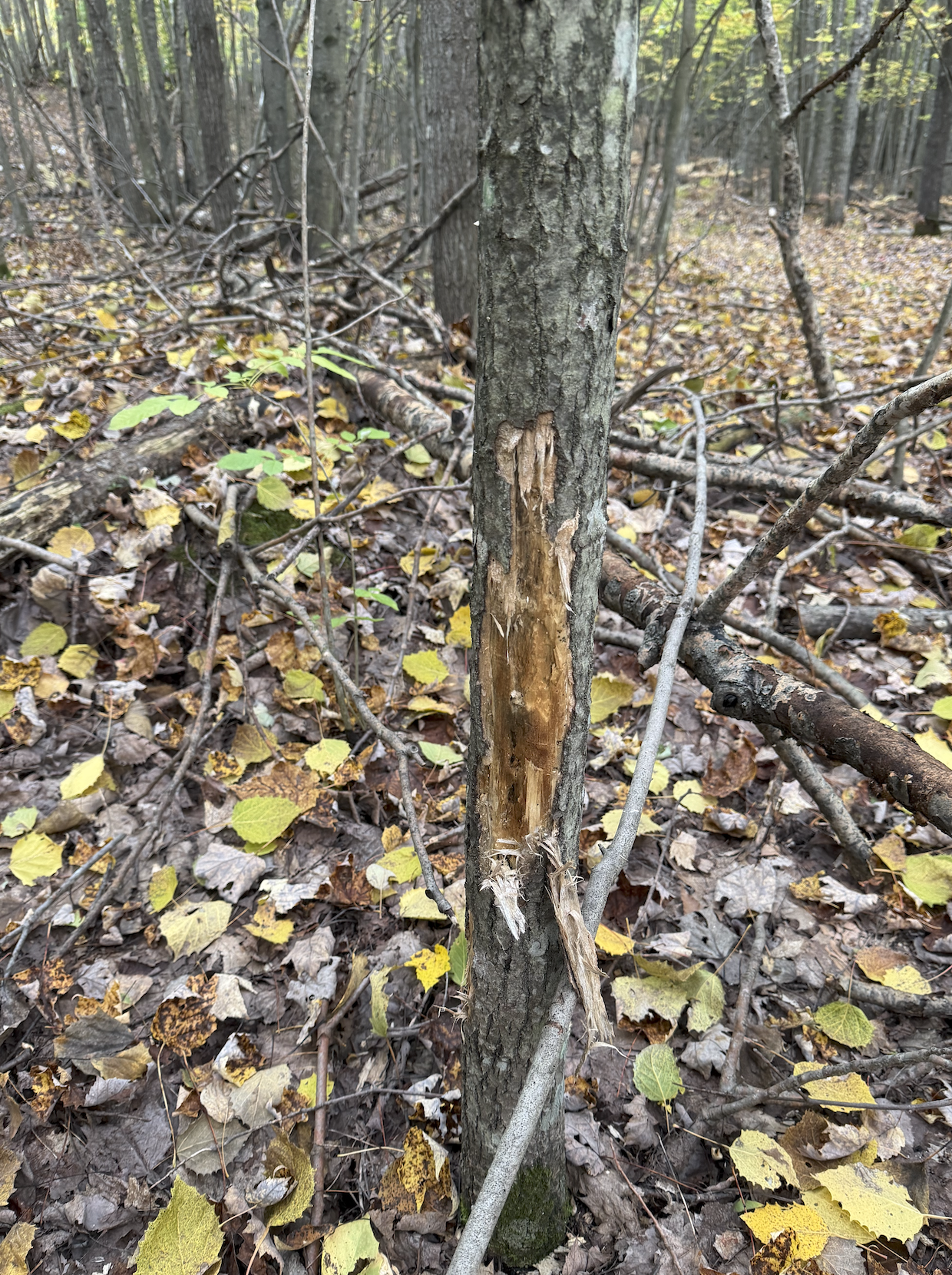
Bucks become increasingly involved in rubbing, scraping, and eventually searching for receptive does.
That can change where they spend their time.
A buck that followed a predictable feeding routine throughout September might begin covering different parts of his home range.
As late October approaches, those changes can become more noticeable.
For Michigan hunters, this transition is particularly interesting because November is such an important period for breeding activity.
My advice: Begin looking beyond feeding areas. Pay attention to fresh rubs, scrapes, travel corridors, and routes connecting bedding cover with food.
4. Your Trail Cameras Only Show Part of the Picture
I love trail cameras.
They're one of the most useful scouting tools available to modern deer hunters.
But I think we sometimes give them too much credit.
A trail camera tells you what happened in one specific location.
That's it.
If a buck changes his travel route by 75 yards, he might disappear from your camera without ever leaving the property.
And if you're relying entirely on those pictures to determine whether a buck is still around, you could be making assumptions based on incomplete information.
That's exactly what I'm considering with the mature bucks we've been watching this season.
We haven't photographed them since October 3rd.
But that doesn't prove they've left.
My advice: Combine trail camera information with fresh sign, terrain, food availability, and actual observations from the stand.
Don't let an empty camera card convince you that an entire area is dead.
5. You're Still Hunting September Patterns
This might be the biggest mistake of all.
We become attached to what worked before.
We remember those summer trail camera pictures.
We remember the buck that walked through a particular opening three evenings in a row.
We remember exactly where he was feeding.
And we keep hunting that same location, expecting the same results.
But deer hunting doesn't work that way.
Conditions change.
Food changes.
Hunting pressure changes.
And bucks change how they use the landscape.
If you're still hunting a September pattern in the middle of October, there's a chance you're chasing a memory instead of current deer activity.
My advice: Be patient, but don't be stubborn. There's a difference.
How to Find Bucks During the October Lull
So what should you actually do when the mature bucks you've been watching suddenly disappear?
Here's how I would approach it.
Start With Fresh Deer Sign
Forget what a particular trail looked like two months ago.
Find out what's happening now.
Look for recently made rubs, active scrapes, fresh tracks, and feeding activity.
Try to identify areas that deer are currently using rather than relying on old information.
Find Bedding Areas Without Disturbing Them
Mature bucks often use cover that provides security.
That might include thick vegetation, overlooked pockets of habitat, or terrain that makes human access more difficult.
But be careful.
You don't necessarily need to walk directly into bedding cover to hunt it effectively.
Sometimes scouting the surrounding terrain and identifying likely travel routes is the better approach.
Reevaluate Your Stand Access
Think about your approach from a deer's perspective.
Where is your scent traveling?
What areas are you walking through?
Could deer hear or see you entering your stand?
Can you access the location without crossing the movement corridor you're trying to hunt?
These details matter.
Look for Travel Corridors
Instead of hunting only where deer feed, consider how they move between bedding areas, food sources, and other cover.
Terrain features such as saddles, benches, creek crossings, and narrow habitat transitions can help concentrate movement.
But terrain alone doesn't guarantee deer activity.
Combine what you see on a map with what you find on the ground.
Don't Be Afraid to Adjust
This doesn't mean you should walk all over your hunting property every day.
Too much scouting pressure can create additional problems.
But if the evidence suggests deer have changed their patterns, be willing to reconsider your approach.
Sometimes the best decision is to stay patient.
Other times, it's to make a calculated move.
Is the October Lull Different on Public Land?
Public-land hunting adds another layer to the challenge.
You might spend weeks studying an area, only to arrive one morning and find another hunter parked at the access point.
You might discover an incredible-looking travel corridor and realize someone already has a stand nearby.
That's public-land hunting.
But it's also part of what makes it interesting.
I've spent time scouting public land throughout northern Michigan, including Alpena County.
And one thing I've learned is that you don't necessarily need to walk miles into the woods to find good deer habitat.
Sometimes promising locations are closer than you think.
The key is understanding access, terrain, cover, food, and how other hunters might influence deer movement.
Don't automatically assume the deepest part of the woods is the best.
Look for overlooked areas where deer have a reason to travel and where you can hunt without creating unnecessary disturbance.
For more on this, read my guide: How to Scout Public Land for Deer.
When Does the October Lull End in Michigan?
There isn't a single date when the October lull officially ends.
In fact, the research we've discussed suggests it may not be a distinct shutdown in buck movement at all.
In Michigan and much of the northern whitetail range, buck activity associated with the rut generally becomes more noticeable as October progresses into November.
But that doesn't mean you should write off the middle of October.
There are opportunities throughout the month.
The important thing is recognizing that the tactics that worked during September might need to change as the season progresses.
Frequently Asked Questions About the October Lull
Why do bucks disappear in October?
Mature bucks can seem to disappear because of changing food sources, shifting travel patterns, hunting pressure, and seasonal behavior. A buck disappearing from trail cameras doesn't necessarily mean he has left the property.
Do deer stop moving during the October lull?
No. Deer continue moving during October. GPS tracking research has challenged the idea that bucks universally reduce their movement during this period, although movement patterns vary between individual deer.
Where do mature bucks go in October?
Some bucks shift their use of feeding areas, bedding cover, or travel corridors. Others may expand their home ranges as the breeding season approaches. There isn't one universal destination.
Is October a good time to hunt whitetail deer?
Yes. October offers hunting opportunities throughout the month. Paying attention to fresh sign, current food sources, hunting pressure, and stand access can help hunters adjust as conditions change.
Should I move my trail cameras in October?
Not automatically. First evaluate whether food sources or travel routes have changed. If fresh sign suggests deer are using another area, strategically relocating a camera may provide better information.
Does a cold front make deer move more in October?
Cooler weather can influence how hunters experience deer activity, but temperature alone isn't a reliable guarantee of increased movement. Food, habitat, hunting pressure, and seasonal breeding behavior all matter.
Final Thoughts: Maybe the Bucks Didn't Disappear
Here's what I keep coming back to.
We had several mature bucks on camera throughout the summer and September.
We knew their travel corridors.
We knew their patterns.
We had every reason to believe we'd have opportunities to encounter them during the early archery season.
Then October arrived, and those bucks disappeared from our cameras.
And despite sitting through a cold, soaking-wet opening day and seeing plenty of other deer, the bucks we were hoping to see never showed up.
It's frustrating.
But it's also one of the things I love about whitetail hunting.
Just when you think you've figured something out, the woods remind you how much you still have to learn.
I don't know exactly where those bucks are today.
Maybe they've moved into different cover.
Maybe they've found another food source.
Maybe they're traveling just outside the areas we've been monitoring.
Or maybe their home ranges have changed more than we realize.
What I do know is that I'm not ready to assume they're gone.
And I don't think you should automatically make that assumption about the bucks you're hunting either.
Sometimes the October lull isn't about deer disappearing. It's about hunters needing to change how they look for them.
Keep scouting. Keep learning. Pay attention to the details.
And don't give up on October.
Because those mature bucks are out there somewhere.
The challenge is figuring out where.
WildNatureMan — Hunting, Fishing, Fitness, and Life Outdoors.
Research and Sources
- Penn State Deer-Forest Study: October Lull – Take 2
- Penn State Deer-Forest Study: Miles and Miles to Go
- Penn State Deer-Forest Study: October Lull – Version 2.0