The Ultimate Preseason Deer Hunting Checklist for Better Success
Successful deer seasons start long before opening day. Discover the ultimate preseason deer hunting checklist with expert tips on scouting, trail cameras, stand placement, gear preparation, habitat improvements, and hunting strategies to help you maximize your success this fall.

The Ultimate Preseason Deer Hunting Checklist: How to Prepare for Your Best Season Yet
Every successful deer season starts months before opening day.
While many hunters spend the summer thinking about fall, the hunters who consistently tag mature bucks are already putting in the work. They know that success isn't determined on opening morning; it's earned through preparation, scouting, planning, and discipline long before the first arrow is released or trigger is pulled.
Whether you're hunting private property, public land, or a mix of both, the preseason offers an opportunity to stack the odds in your favor. The more tasks you complete before deer season begins, the less scrambling you'll do when it matters most.
This guide walks through the most important preseason tasks every hunter should consider before opening day. From property management and scouting to equipment maintenance and physical preparation, you'll enter the season with confidence knowing you've covered every major detail.
Why Preseason Preparation Matters
Whitetails are creatures of habit, but only until hunting pressure begins.
Throughout the summer, deer often follow consistent feeding patterns, bedding areas remain predictable, and bucks travel together in bachelor groups. Once hunting pressure increases, those patterns can change almost overnight.
That means the work you complete before the woods fill with hunters becomes incredibly valuable.
Benefits of thorough preseason preparation include:
- More confidence entering opening day
- Better understanding of deer movement
- Less pressure placed on hunting properties
- Fewer equipment failures
- More efficient hunts
- Higher odds of harvesting mature deer
Simply put, preparation reduces luck and increases opportunity.
1. Review Last Season Before Planning This One
One of the most overlooked scouting tools isn't a trail camera.
It's your own memory.
Before stepping foot into the woods this summer, spend time reviewing everything you learned last season.
Ask yourself:
- Where did you consistently see deer?
- Which stands produced the most encounters?
- Which locations went completely cold?
- What wind directions worked best?
- Where did mature bucks disappear?
- What mistakes did you make?
If you keep hunting journals or use mapping software, now is the perfect time to review those notes.
Patterns often repeat from year to year, especially regarding food sources, bedding cover, and travel corridors.
Learning from previous seasons prevents repeating the same mistakes.
2. Scout Smarter During the Summer
Many hunters make one critical mistake.
They scout too aggressively.
Walking through bedding cover every weekend might satisfy curiosity, but it also educates deer long before the season opens.
Instead, focus on low-impact scouting.
Look for:
- Fresh trails
- Rub lines from previous seasons
- Creek crossings
- Funnel locations
- Field edges
- Natural pinch points
- Oak ridges
- Water sources
Use binoculars whenever possible rather than walking directly into high-value areas.
Observe from a distance.
Every unnecessary intrusion teaches deer something about your presence.
3. Maximize Trail Camera Effectiveness
Trail cameras provide information, but only when used strategically.
Rather than placing cameras randomly throughout the woods, identify locations that naturally concentrate deer movement.
Excellent camera locations include:
- Mineral sites (where legal)
- Field entrances
- Water holes
- Creek crossings
- Scrape areas
- Funnels
- Saddle crossings
- Logging roads
Check cameras sparingly.
Every visit leaves scent behind.
Wireless cellular cameras have become invaluable because they reduce human pressure while providing real-time intelligence.
Instead of obsessing over individual bucks, pay attention to:
- Travel timing
- Doe numbers
- Wind conditions
- Feeding direction
- Population trends
- Overall herd health
Patterns matter more than pictures.
4. Improve Habitat Where Possible
If you hunt private property, summer is one of the best times to improve habitat.
Healthy habitat keeps deer nearby throughout the season.
Consider projects such as:
Creating Bedding Cover
Young thick vegetation provides security.
Selective hinge cutting and timber management can dramatically increase bedding opportunities.
Enhancing Food Sources
Depending on your region, consider planting:
- Clover
- Brassicas
- Winter wheat
- Soybeans
- Chicory
- Oats
Food plots don't need to be enormous.
Even small destination plots can influence deer movement.
Water Sources
Water becomes increasingly valuable during warm early-season hunts.
Small ponds, wildlife water tanks, or naturally maintained water holes often become consistent attraction points.
5. Prepare Every Tree Stand
Opening morning isn't the time to discover loose straps or noisy platforms.
Inspect every stand carefully.
Check for:
- Rust
- Cable wear
- Ratchet strap condition
- Platform stability
- Tree growth affecting fit
- Safety harness connections
Replace anything questionable.
Your safety is worth far more than saving a few dollars.
While you're there:
- Trim shooting lanes carefully.
- Remove noisy branches.
- Practice climbing quietly.
- Install lifelines.
- Mark access routes.
The quieter you can enter and exit, the better.
6. Hang New Stands Early
Freshly hung stands often receive too much immediate pressure.
Installing stands weeks before season allows the woods to settle.
Focus on locations offering:
- Multiple wind options
- Concealed access
- Nearby bedding
- Nearby food
- Natural travel corridors
Think beyond where deer are today.
Think about where they'll be after the first weekend of hunting pressure.
That mindset often separates experienced hunters from beginners.
7. Build Multiple Hunting Plans
One stand is never enough.
Changing winds require flexibility.
Develop:
- North wind setup
- South wind setup
- East wind setup
- West wind setup
Also identify:
- Morning locations
- Evening locations
- Rut funnels
- Cold-front stands
- Rainy-day locations
The more options available, the less likely you'll burn out a productive spot.
8. Tune Your Bow or Firearm Long Before Opening Day
Nothing ruins a season faster than equipment that isn't shooting accurately.
Whether you're a bowhunter or firearm hunter, summer is the time to verify that every shot lands exactly where you expect.
For Bowhunters
Inspect your equipment from top to bottom.
Check:
- Strings and cables for wear
- Serving separation
- Limb cracks
- Loose sight pins
- Arrow rest alignment
- Peep sight rotation
- Broadhead flight
- Nock fit
- Arrow spine consistency
Practice with the same broadheads you'll hunt with. A field point that groups perfectly doesn't guarantee a fixed-blade broadhead will hit the same spot.
For Firearm Hunters
Don't assume last year's zero is still accurate.
Confirm:
- Scope mounts
- Ring screws
- Barrel condition
- Trigger function
- Ammunition consistency
- Zero at your expected hunting distance
If you changed ammunition brands or bullet weights, sight in again from scratch.
Confidence begins with knowing exactly where your projectile will land.
9. Build a Consistent Shooting Routine
Practice shouldn't simply mean launching arrows or firing rounds.
Every repetition should simulate a real hunting situation.
Practice from:
- Elevated positions
- Tree stands
- Ground blinds
- Kneeling
- Sitting
- Offhand positions
- Awkward shooting angles
Add pressure by limiting yourself to one "first shot" each practice session. That first shot is often the only one that matters during deer season.
If possible, wear the same clothing, gloves, face mask, and backpack you'll use during the season.
You'll quickly identify anything that interferes with drawing your bow or mounting your firearm.
10. Prepare Your Access Routes
Many hunters obsess over stand locations while ignoring how they'll get there.
Often, the access route determines whether a hunt succeeds or fails.
Walk every planned entry and exit route.
Remove:
- Dead branches
- Fallen logs
- Briars
- Noisy brush
- Obvious obstacles
Look for ways to stay hidden from bedding areas and feeding fields.
Whenever possible:
- Walk creek bottoms.
- Use terrain to stay concealed.
- Avoid skyline exposure.
- Minimize scent contamination.
Quiet access equals more opportunities.
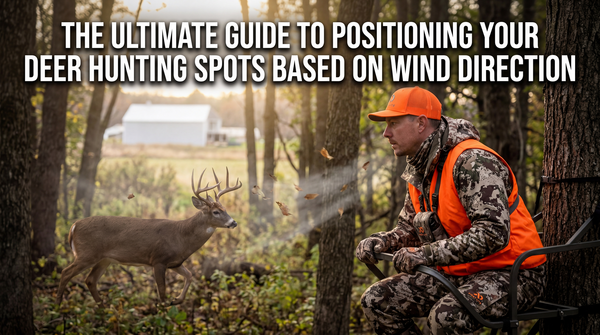
11. Learn How Wind Shapes Deer Movement
Wind doesn't just affect scent.
It changes how deer travel.
Mature bucks frequently position themselves where they can use the wind to detect danger while maintaining visual awareness.
Study your property under different wind conditions.
Ask:
- Which bedding areas become inaccessible?
- Which funnels improve with a northwest wind?
- Which food sources receive evening thermals?
- Where does swirling wind become a problem?
Modern mapping apps allow hunters to overlay wind forecasts with stand locations, making planning much easier.
Never force a hunt simply because it's opening day.
Hunt the right wind.
12. Refresh Your Hunting Clothing
Before the season begins:
Inspect every piece of clothing.
Replace:
- Broken zippers
- Torn seams
- Worn boots
- Damaged rain gear
- Leaking waterproof layers
Wash clothing according to manufacturer recommendations and store it in scent-free containers if scent management is part of your hunting strategy.
Most importantly...
Break in new boots months before opening day.
Blisters have ended more hunts than many hunters would like to admit.
13. Organize Your Hunting Pack
A well-organized backpack saves valuable time in the woods.
Consider carrying:
Essential Gear
- License and tags
- Rangefinder
- Headlamp
- Extra batteries
- Knife
- Field dressing gloves
- Rope
- Water bottle
- Snacks
- Wind checker
- Small first aid kit
- Multi-tool
- Phone charger
- Lighter
- Paracord
Pack only what you truly need.
Extra weight becomes noticeable after miles of hiking.
14. Prepare for Deer Recovery Before You Need It
Many hunters spend countless hours preparing to shoot a deer.
Far fewer prepare to recover one.
Think through your recovery plan before opening day.
Know:
- Property boundaries
- Neighbor contact information
- Local tracking dog availability
- Blood trailing equipment
- Access routes for game carts
- Nearby processors
A successful recovery often depends on preparation rather than luck.
15. Scout Food Sources Throughout the Summer
Food availability changes constantly.
The field attracting dozens of deer in July may become nearly empty by October.
Monitor:
- Agricultural crops
- Oak tree production
- Soft mast
- Food plots
- Browse pressure
- Water availability
Pay particular attention to acorn production.
In many regions, a heavy white oak crop can dramatically shift deer movement during early fall.
Food drives movement.
Movement creates opportunity.
16. Locate Early-Season Bedding Areas
Food matters.
Bedding matters more.
Mature bucks rarely travel far during daylight early in the season.
Instead of focusing solely on feeding areas, identify where deer spend most of their day.
Look for:
- Thick cover
- South-facing slopes
- Young regeneration
- Swamps
- CRP fields
- Cedar thickets
- Dense creek bottoms
Avoid repeatedly walking through bedding areas.
Confirm their location and leave them alone until conditions are right.
17. Develop Multiple Stand Entry Times
Not every stand should be hunted the same way.
Some locations perform best:
- Before daylight
- Mid-morning
- Midday
- Evening
- During cold fronts
- During the rut
- After rain
Label each stand according to its ideal conditions.
This prevents overhunting productive locations.
18. Practice Using Mapping Software
Today's hunters have incredible technology available.
Spend time learning every feature your preferred mapping application offers.
Mark:
- Stand locations
- Camera locations
- Bedding areas
- Funnels
- Water sources
- Property lines
- Parking areas
- Access routes
- Historical rubs
- Scrapes
- Harvest locations
Over several seasons, this becomes an invaluable hunting journal.
Patterns become obvious.
19. Improve Physical Fitness
Dragging a mature whitetail across rough terrain isn't easy.
Neither is climbing hills before sunrise carrying gear.
Summer is the perfect time to improve your conditioning.
Focus on:
- Hiking
- Strength training
- Core stability
- Grip strength
- Mobility
- Cardiovascular endurance
You don't need to become a marathon runner.
But better conditioning means quieter access, steadier shooting, and easier recoveries.
20. Know the Regulations Before Opening Day
Every year, regulations change.
Review your state's current hunting guide.
Confirm:
- Season dates
- Bag limits
- Legal shooting hours
- Public land regulations
- Blaze orange requirements
- Tagging procedures
- Chronic Wasting Disease regulations
- Transportation rules
A five-minute review can prevent costly mistakes.
21. Create a Weather Strategy
Weather dramatically influences deer activity.
Rather than hunting the same schedule every weekend, identify conditions that historically increase movement.
Watch for:
- Significant temperature drops
- High-pressure systems
- Calm evenings after storms
- First frosts
- Wind shifts
- Barometric pressure changes
When favorable conditions align with your best stand location, don't hesitate to capitalize.
Some of the best hunts of the year occur immediately after dramatic weather changes.
22. Create Mock Scrapes Before the Season (Where Appropriate)
While natural scrapes become more active closer to the rut, some hunters have found success establishing mock scrapes along travel corridors during late summer and early fall. A well-placed mock scrape can encourage deer to investigate and, more importantly, provide a reliable location for a trail camera.
When creating a mock scrape:
- Choose a location along an active trail or field edge.
- Use an existing licking branch whenever possible.
- Keep human scent to a minimum.
- Avoid checking the camera too frequently.
Remember, the goal isn't necessarily to attract deer from long distances, it's to monitor the deer already using the area.
23. Take Inventory of Your Hunting Supplies
Opening week is not the time to realize you're out of essentials.
Make a checklist and restock items like:
- Broadheads
- Field points
- Arrows or bolts
- Rifle ammunition
- Batteries
- Scent-elimination products
- Zip ties
- Flagging tape
- Disposable gloves
- Drag rope
- Game bags
- Hand warmers
- Trail camera SD cards
- Camera batteries
Having backups for critical gear can save an entire hunt.
24. Prepare Your Trail Cameras for the Long Haul
Trail cameras only provide useful information if they're functioning properly.
Before hanging cameras:
- Update firmware if needed.
- Format memory cards.
- Install fresh batteries.
- Test photo and video settings.
- Verify the date and time.
- Check cellular signal strength (if applicable).
- Clear old photos and organize previous seasons' images.
A little maintenance now can prevent missing the one buck you've been waiting for.
25. Analyze Trail Camera Data. Don't Just Chase Big Bucks
It's easy to get excited when a mature buck appears on camera.
But focusing only on antlers can cause you to overlook valuable information.
Look for patterns such as:
- What time are deer moving?
- Which wind direction produced the most activity?
- How often are does using an area?
- Which trails receive consistent traffic?
- How does movement change after rain or temperature drops?
Successful hunters look for trends, not just trophies.
26. Develop a Season-Long Hunting Plan
Don't rely on a single strategy.
Instead, divide the season into phases.
Early Season
Focus on predictable food sources and evening movement.
Pre-Rut
Target travel corridors between bedding and feeding areas.
Peak Rut
Hunt funnels, pinch points, and downwind sides of doe bedding areas.
Late Season
Prioritize remaining food sources and thermal cover.
Having a flexible game plan allows you to adapt as deer behavior changes throughout the fall.
27. Minimize Pressure on Your Best Spots
One of the biggest mistakes hunters make is overhunting their best stand.
Every hunt introduces:
- Human scent
- Ground disturbance
- Noise
- Visual intrusion
Instead of hunting the same location every chance you get, rotate between multiple setups based on wind, weather, and recent deer activity.
Sometimes, the best decision is choosing not to hunt a great stand until conditions are nearly perfect.
28. Prepare for Emergencies
Even short hunts can take unexpected turns.
Carry basic emergency supplies, especially when hunting remote properties.
Consider including:
- Compact first-aid kit
- Emergency whistle
- Fire starter
- Emergency blanket
- Power bank for your phone
- Map or GPS device
- Extra flashlight
Always let someone know:
- Where you're hunting
- Which stand you'll be using
- When you expect to return
Safety should always come before success.
29. Maintain Your Vehicle
Your truck or ATV is just as important as your bow or rifle.
Before the season:
- Check tire pressure.
- Inspect the spare tire.
- Change the oil if needed.
- Test lights.
- Verify your trailer is road-ready.
- Stock recovery straps and jumper cables.
The last thing you want is a mechanical issue standing between you and the woods on opening morning.
30. Set Realistic Goals for the Season
Success means something different to every hunter.
Before opening day, ask yourself what you're hoping to accomplish.
Your goals might include:
- Harvesting your first deer
- Filling the freezer
- Targeting a mature buck
- Introducing a new hunter to the outdoors
- Learning a new property
- Improving your scouting skills
Having clear goals helps keep each hunt enjoyable, regardless of the outcome.
Common Preseason Mistakes to Avoid
Even experienced hunters make mistakes that can reduce their odds before the season begins.
Avoid these common pitfalls:
Scouting Too Aggressively
More scouting isn't always better. Excessive pressure can push deer into nocturnal patterns or neighboring properties.
Ignoring the Wind
The best stand in the world won't help if your scent reaches deer before you ever see them.
Waiting Until the Last Minute
Rushing to hang stands, sight in equipment, or organize gear often leads to overlooked problems.
Overpacking
Bring what you need, but leave unnecessary gear at home.
Failing to Adapt
Conditions change. Be willing to adjust your plan as food sources, weather, and deer movement evolve.
Final Thoughts
Every deer hunter dreams about opening morning, but the reality is that success is built long before the season begins.
The hunters who consistently find themselves standing over mature whitetails aren't necessarily luckier, they're better prepared.
By spending time scouting intelligently, maintaining your equipment, improving your property, organizing your gear, and developing multiple hunting strategies, you'll head into the season with confidence and a clear plan.
No preseason checklist can guarantee a filled tag, but thorough preparation dramatically improves your chances while making every hunt safer and more enjoyable.
So don't wait until the leaves start changing. Start checking off these preseason tasks now, and when opening day finally arrives, you'll be ready for whatever the woods have in store.
Good luck this season and hunt safe.
Frequently Asked Questions
When should I start preparing for deer season?
The best time to begin is immediately after the previous season ends. However, most habitat work, scouting, and equipment preparation occur during late spring and summer, giving deer time to return to normal patterns before opening day.
How often should I check trail cameras before deer season?
The answer depends on the property and camera type. Cellular trail cameras allow you to monitor activity without entering the area, while traditional cameras should generally be checked as infrequently as practical to reduce pressure and human scent.
Should I hunt the same stand every weekend?
Usually not. Repeatedly hunting the same location can increase pressure and educate deer. Rotating stands based on wind direction, weather, and deer activity is typically a better long-term strategy.
Is summer scouting worth it?
Yes—but it should be done carefully. Observing from a distance, using optics, reviewing aerial maps, and placing trail cameras strategically can provide valuable information while minimizing disturbance.
What's the most overlooked part of preseason preparation?
Many hunters focus heavily on equipment but overlook entry routes, exit strategies, and how their scent travels through the property. Quiet, low-impact access is often just as important as choosing the right stand location.