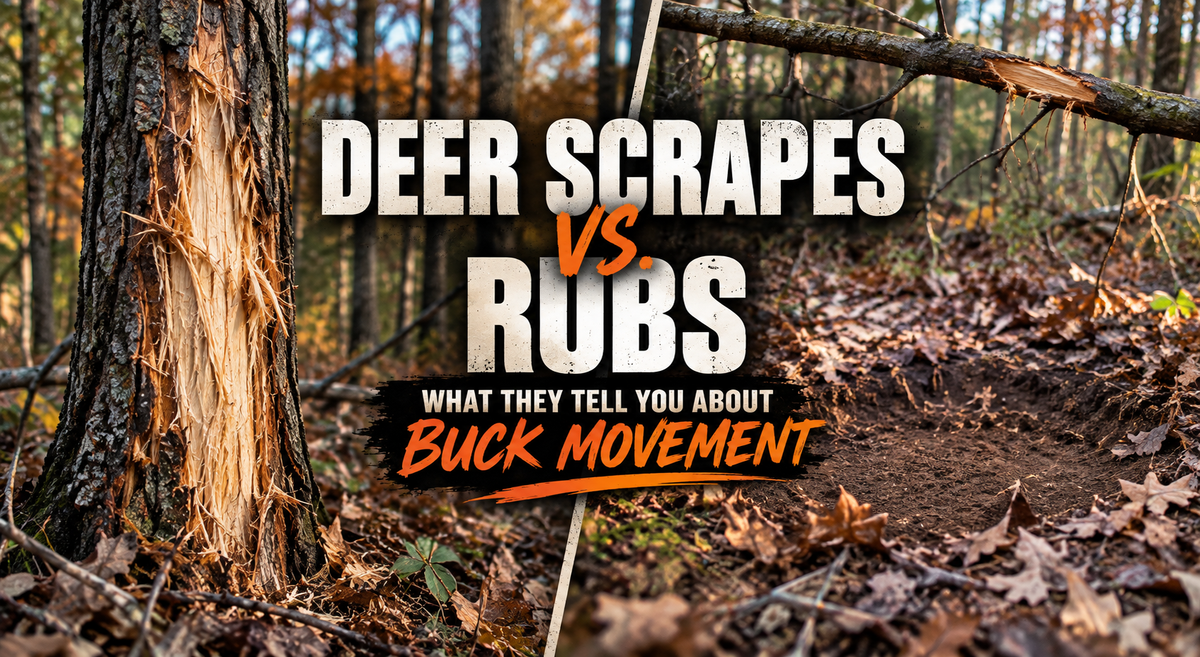
Deer Scrapes vs. Rubs: What They Tell You About Buck Movement
Finding deer rubs and scrapes is exciting, but what do they actually tell you about mature buck movement? Learn the difference, what research reveals about deer behavior, and how to use fresh sign to make smarter hunting decisions.
Every fall, whitetail hunters head into the woods looking for deer sign. Rubs, scrapes, tracks, trails. But finding deer sign and understanding what that sign actually means are two completely different things.
There's something about walking through the woods in October and coming across a fresh buck rub that gets the blood pumping.
You know what I'm talking about.
You're scouting a piece of timber, following a trail, or maybe heading toward a stand you've hunted for years.
Then you spot it.
A tree with its bark torn up, fresh wood exposed, and shavings scattered around the base.
Immediately, your mind starts racing.
How big was the buck that made it? When was he here? Is he bedding nearby? Could this be the buck you've been watching on your trail cameras?
Then, another 50 yards down the trail, you discover a scrape.
Leaves pushed away. Fresh dirt exposed. A low-hanging branch directly above it.
Now you're really getting excited.
But here's where I think a lot of deer hunters, myself included, need to be careful.
Just because you find a big rub or an active scrape doesn't mean you've found a good place to hunt.
Finding the sign is the easy part.
Understanding what that sign tells you about deer movement, travel corridors, bedding areas, and how bucks use the property is where things get interesting.
And there's some fascinating research behind both rubs and scrapes that might change how you approach them.
What Is the Difference Between Deer Scrapes and Rubs?
Both rubs and scrapes are forms of communication used by whitetail deer, particularly bucks, during the fall breeding season.
But they aren't the same thing.
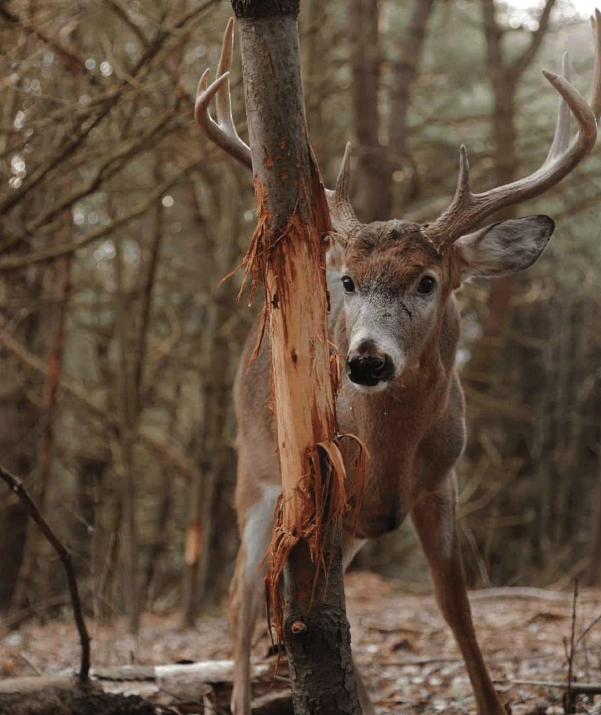
A deer rub is created when a buck uses his antlers to rub against a tree or woody vegetation, stripping away bark and often depositing scent from glands on his forehead.
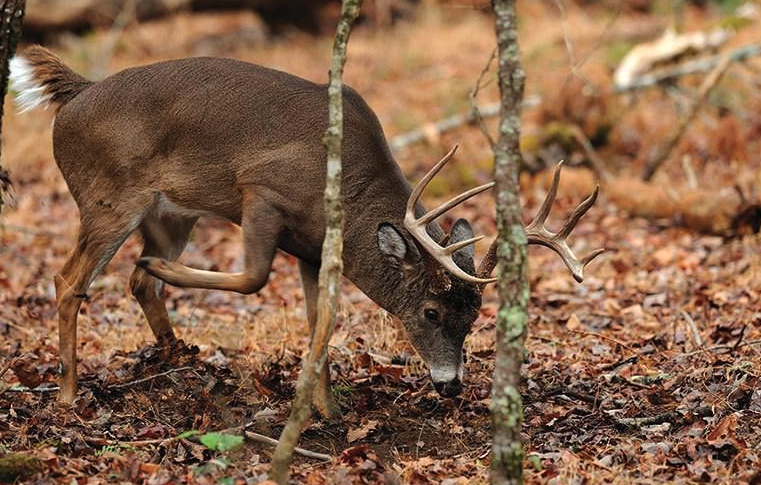
A deer scrape is an area of ground where a deer has pawed away leaves and vegetation, usually beneath an overhanging branch. Deer communicate through scent deposited in the scrape and on the branch above it.
Think of it this way.
A rub tells you a buck was physically present at a particular tree.
A scrape can act as a communication point visited by multiple deer over time.
Neither one, by itself, tells you exactly when a mature buck will return.
And that distinction matters.
What Deer Rubs Tell You About Buck Movement
Why Do Bucks Rub Trees?
Bucks begin rubbing trees as their antlers harden and they shed their velvet.
But rubbing doesn't stop once the velvet is gone.
As fall progresses, bucks continue rubbing trees as part of their seasonal behavior.
These rubs can serve as visual and scent-based communication markers.
A buck may deposit scent from glands on his forehead while rubbing, leaving information that other deer can investigate.
The Pennsylvania Game Commission describes rubs and scrapes as important communication signposts associated with the breeding season.
So when you find a rub, you're looking at more than damaged bark.
You're looking at evidence of a buck's activity.
But how useful that evidence is depends on the bigger picture.
Does a Big Rub Mean a Big Buck?
This is one of those things deer hunters love to debate.
You find a tree the size of your thigh that's been absolutely destroyed, and immediately someone says, "That's a giant buck."
And maybe it is.
Larger-antlered bucks can rub larger trees, but tree diameter alone is not a reliable way to determine a buck's age or antler size.
Smaller bucks can rub larger trees, and mature bucks regularly rub smaller saplings.
I've always felt that the location of a rub can tell you more about how to hunt an area than the size of the tree itself.
A massive rub in the middle of nowhere is interesting.
But several fresh rubs along a defined travel corridor, near good cover and an active food source?
Now you've got something worth investigating.
What Is a Buck Rub Line?
A rub line is a series of rubbed trees found along a route used by a buck or multiple bucks.
Hunters often associate rub lines with travel between bedding areas, feeding locations, and other parts of a buck's home range.
But here's an important detail.
Not every rub line belongs to one buck.
Multiple deer may travel the same corridor and rub trees along the way.
The presence of several rubs doesn't automatically mean one giant buck is following the exact same trail every afternoon.
What it does suggest is that bucks have been using that general area.
And that's valuable information.
How I Would Hunt a Rub Line
If I discover several fresh rubs along a trail, I'm not immediately hanging a stand over the biggest one.
First, I want to understand the terrain.
Where does the trail lead?
Is there thick bedding cover nearby?
Does the trail connect to a food source?
Are there terrain features that naturally funnel deer through a particular area?
And probably most importantly, can I hunt that location without alerting deer to my presence?
I would rather find a modest rub line in a location I can access quietly, with favorable wind conditions, than hunt a massive rub that requires me to walk directly through deer bedding cover.
The goal isn't necessarily to hunt the rub.
It's to figure out how bucks are using the area around it.
What Deer Scrapes Tell You About Buck Movement
Now let's talk about scrapes.
Because if rubs get hunters excited, fresh scrapes can make us downright obsessed.
You walk up on a big patch of exposed dirt beneath a low-hanging branch, and immediately start picturing a mature buck standing there during daylight.
But there's a lot more happening at a scrape than most hunters realize.
Why Do Bucks Make Scrapes?
Scrapes are communication sites.
A buck may paw away leaves and debris, investigate the exposed soil, deposit urine, and interact with an overhanging branch.
That branch is especially important.
Deer can deposit scent through glands around their face while rubbing, licking, or otherwise interacting with the branch.
Other bucks and does may visit the same location, investigating the scent left behind.
In other words, scrapes aren't simply one buck marking a location for himself.
They're part of a much larger communication system.
And researchers have been studying just how important these locations are to whitetail behavior.
The Science Behind Deer Scrapes Might Surprise You
A study published in the Journal of Mammalogy examined whitetail scrape behavior at the Ames Research and Education Center in Tennessee.
Researchers monitored 107 scrapes over several months, recording more than 3,000 scrape interactions.
Here's what they found:
- Bucks accounted for approximately 73% of recorded scrape interactions.
- Does accounted for approximately 23%.
- Fawns accounted for the remaining 4%.
- Approximately 67% of scrape interactions occurred at night.
- Bucks at least 4.5 years old had the lowest proportion of daytime scrape visits among the age groups studied, at approximately 16%.
Read that last part again.
The oldest bucks in that study had a relatively small percentage of their scrape visits occur during daylight.
Now, that doesn't mean you can't kill a mature buck over a scrape.
Hunters do it.
But it does challenge the idea that every active scrape is automatically a great place to sit.
A scrape can be incredibly active without being a reliable daylight hunting location.
And that's a distinction every deer hunter should understand.
Why the Licking Branch Matters
Here's something I find particularly interesting.
When most hunters discover a scrape, their attention immediately goes to the exposed dirt.
But the branch hanging above it may be just as important, if not more important, to understanding deer behavior.
Research has documented bucks and does interacting with licking branches through smelling, licking, and facial gland marking.
In one study of scrape behavior, interactions with overhanging branches were among the most frequently observed activities.
That means the scrape isn't just about the disturbed ground.
It's about communication.
And a location that multiple deer repeatedly visit can provide valuable information about how deer use a particular area.
If you're using trail cameras to monitor scrapes, make sure your camera captures both the ground and the licking branch.
You might be surprised by what you see.
Which Is Better to Hunt: Deer Scrapes or Rubs?
Here's where I think hunters can get themselves into trouble.
We spend so much time asking whether scrapes or rubs are better that we forget the more important question.
Where is the buck actually moving during daylight?
A rub tells you a buck has been there.
A scrape tells you deer are communicating at that location.
Neither guarantees that a mature buck will be there when you're sitting in your stand.
Personally, I would prioritize the location and surrounding habitat over the type of sign.
Give me fresh buck sign along a natural travel corridor, with nearby bedding cover and an access route I can hunt without being detected.
That's more interesting to me than a massive scrape in an exposed location that deer only visit after dark.
How to Evaluate the Sign
When I find a promising area, these are the questions I want answered:
- Is the sign fresh? Recently exposed wood, disturbed soil, tracks, and repeated activity can help establish whether deer are currently using the area.
- Where is the sign located? Is it near bedding cover, food, a terrain feature, or a heavily traveled corridor?
- What does the trail camera show? Are bucks using the area during daylight or primarily at night?
- Can I access it without being detected? Wind, thermals, visibility, and noise all matter.
- Does the surrounding habitat explain why deer are there? A rub or scrape becomes much more useful when you understand the movement pattern around it.
I think answering those questions will help you more than simply choosing between a rub and a scrape.
When Do Bucks Make the Most Rubs and Scrapes?
In Michigan, rub and scrape activity becomes particularly interesting during September, October, and the approach to the November rut.
But the two behaviors don't follow identical patterns.
September: Early Rub Activity
As bucks shed velvet and their antlers harden, fresh rubs begin appearing.
Bachelor groups are also breaking apart as fall progresses.
Early rubs can provide useful clues about where bucks have been spending time, although those patterns may change as the season advances.
October: Scrape Activity and Changing Patterns
October is when many hunters begin paying closer attention to scrapes.
Bucks are increasingly engaged in behaviors associated with the upcoming breeding season.
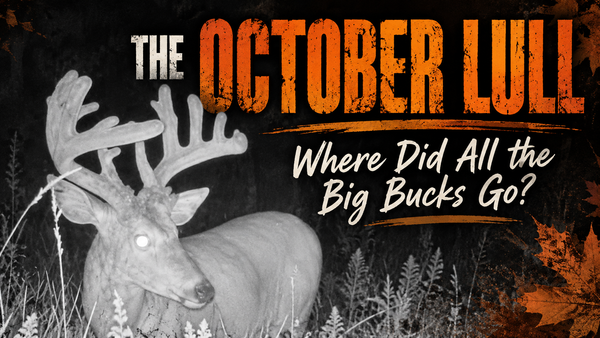
This is also when hunters may experience the frustrating changes in movement patterns commonly called the October lull.
A buck that regularly appeared on camera in September might suddenly disappear.
But as I discussed in my previous article, that doesn't necessarily mean he's stopped moving.
It might mean he's using the property differently.
Related reading: October Lull Deer Hunting: Why Bucks Disappear and How to Find Them
Late October Into November: The Pre-Rut and Rut
As breeding activity approaches, scrape visitation can become more pronounced.
Research has documented peaks in scrape interactions shortly before peak breeding, although the exact timing varies by location.
Once bucks become heavily focused on finding receptive does, their behavior can shift again.
That means a scrape that was active during the pre-rut might become less predictable during peak breeding activity.
And that's why I don't believe in treating any single piece of deer sign as a guaranteed hunting location.
Finding Rubs and Scrapes on Public Land
Public-land hunting adds another challenge.
You don't control who enters the property, where they walk, or how much pressure deer experience.
And sometimes the most obvious deer sign is also the most obvious place for every other hunter to set up.
I've spent plenty of time scouting public land in northern Michigan, and one lesson continues to stand out.
You don't necessarily need to walk miles into the woods to find a good hunting location.
Sometimes the better opportunities are in overlooked areas that other hunters simply walk past.
When I'm evaluating public land, I like to consider how terrain, access points, food sources, and bedding cover fit together.
A fresh rub line or scrape can help confirm that deer are using an area.
But I still want to understand why they're there.
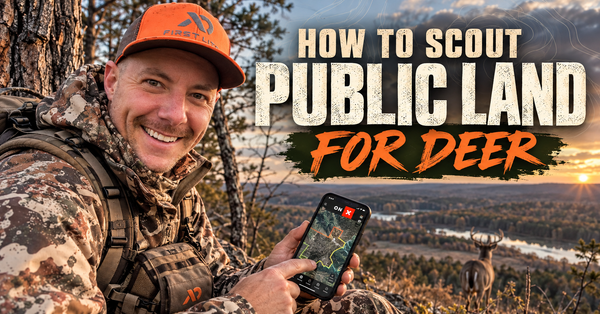
For more on finding overlooked hunting locations, read my guide on How to Scout Public Land for Deer.
Should You Put a Trail Camera Over a Scrape?
I think scrapes can be excellent trail camera locations.
Not necessarily because you're going to capture a mature buck visiting every afternoon.
But because scrapes can attract visits from multiple deer.
That makes them useful locations for learning which bucks are using the area.
If you're trying to identify mature bucks on a property, monitoring an active scrape can provide valuable information.
Just remember that the pictures you collect represent visits to that particular scrape, not the buck's entire movement pattern.
If all your mature buck pictures are happening at 2 a.m., that doesn't mean the buck is completely nocturnal.
It means he's visiting that particular location at night.
He could be moving during daylight somewhere else.
And figuring out where that is might be the difference between a successful hunt and another season of watching trail camera pictures.
Common Mistakes Hunters Make With Rubs and Scrapes
Assuming Every Big Rub Was Made by a Giant Buck
Large rubs are exciting, but tree size alone doesn't tell you the age or antler size of the buck responsible.
Hunting Directly Over Every Active Scrape
An active scrape might receive most of its visits at night.
Sometimes the travel routes leading toward that scrape are more useful than the scrape itself.
Ignoring the Surrounding Terrain
A rub or scrape without context is incomplete information.
Study the cover, food sources, access routes, and terrain surrounding the sign.
Checking Trail Cameras Too Frequently
Repeated human activity can influence how deer use an area.
Sometimes collecting more information isn't worth the additional disturbance.
Believing One Buck Owns Every Scrape
Research has documented multiple bucks and does visiting the same scrapes.
Don't automatically assume a scrape belongs to one particular mature buck.
Frequently Asked Questions About Deer Scrapes and Rubs
What is the difference between a deer rub and a scrape?
A rub is created when a buck uses his antlers against a tree or woody vegetation. A scrape is a pawed area of ground, usually beneath an overhanging branch, that deer use for scent communication.
Do big rubs mean big bucks?
Not necessarily. Larger-antlered bucks can rub larger trees, but rub size alone is not a reliable indicator of a buck's age or antler size.
Do bucks visit scrapes during daylight?
Yes, but many scrape visits occur at night. One camera study found approximately 67% of scrape interactions occurred after dark.
Do does use deer scrapes?
Yes. Although bucks account for most scrape interactions in many studies, does also investigate and interact with scrapes and licking branches.
Should you hunt over a scrape or a rub line?
It depends on the location, current deer activity, and whether bucks are moving through the area during daylight. Neither a scrape nor a rub line guarantees a good hunting location.
When do bucks make scrapes in Michigan?
Scrape activity commonly becomes more noticeable during fall as the breeding season approaches, particularly during October and the pre-rut period.
Can multiple bucks use the same scrape?
Absolutely. Research has documented numerous bucks visiting and interacting with the same scrape locations.
Final Thoughts: Deer Sign Tells a Story, but You Have to Read It
I think one of the biggest mistakes hunters make is getting too excited about finding deer sign without taking the time to understand it.
And trust me, I get it.
There's nothing quite like finding a fresh rub line or walking up on a massive scrape in the middle of the woods.
Your mind immediately starts imagining the buck responsible.
But a rub doesn't tell you exactly when that buck will return.
A scrape doesn't guarantee he's going to show up during daylight.
And neither one means you've automatically found the perfect place to hang a stand.
What they do provide is information.
Clues.
Pieces of a much bigger puzzle.
And the more time you spend scouting, observing, studying terrain, and understanding how deer use a property, the better you become at putting those pieces together.
That's one of the things I love most about whitetail hunting.
You never really have it all figured out.
Just when you think you understand a buck's movement patterns, he changes them.
Just when you think you've found the perfect stand location, something else catches your attention.
And just when you think you've learned everything there is to know about deer behavior, the woods teach you something new.
So the next time you find a fresh rub or an active scrape, don't immediately start looking for a tree to climb.
Look around.
Study the terrain.
Follow the sign.
Ask yourself why a buck would be using that particular location.
Because finding deer sign is one thing. Understanding what that sign tells you is what makes you a better hunter.
And sometimes, that's the difference between seeing a mature buck on your trail camera and seeing him standing 20 yards away during daylight.
WildNatureMan — Hunting, Fishing, Fitness, and Life Outdoors.