
Hybrid Athlete Training Plan: How to Lift Heavy and Run Every Week
You don't have to choose between lifting heavy and running long distances. Learn how to structure a hybrid athlete training plan that builds strength, improves endurance, and fits into a busy life.


I don't want to choose between being strong and having endurance.
I want to lift heavy weights, run long distances, compete in trail races, and still have the energy to be a husband and father.
I want to be able to run through the woods for hours, walk into the gym the next morning, and move some serious weight.
And I want to keep doing those things for decades.
That's what hybrid training means to me.
But I didn't always train this way.
In fact, when I first started endurance racing less than three years ago, I learned some pretty difficult lessons about what happens when you focus heavily on swimming, biking, and running while neglecting strength training.
I lost weight. A lot of it.
I became a much better endurance athlete.
But I also lost muscle mass, and I lost it faster than I expected.
That experience completely changed how I approach fitness.
Today, I believe combining heavy strength training with endurance work is one of the best ways to build a strong, athletic, capable body.
Not just for racing.
For life.
My Journey: Losing 60+ Pounds, Ironman Racing, and Learning to Lift Heavy Again
Less than three years ago, endurance racing was completely new to me.
I wasn't someone who grew up competing in triathlons or running long-distance races. I was learning as I went, figuring out training, nutrition, recovery, and everything else that comes with endurance sports.
Fast forward to today.
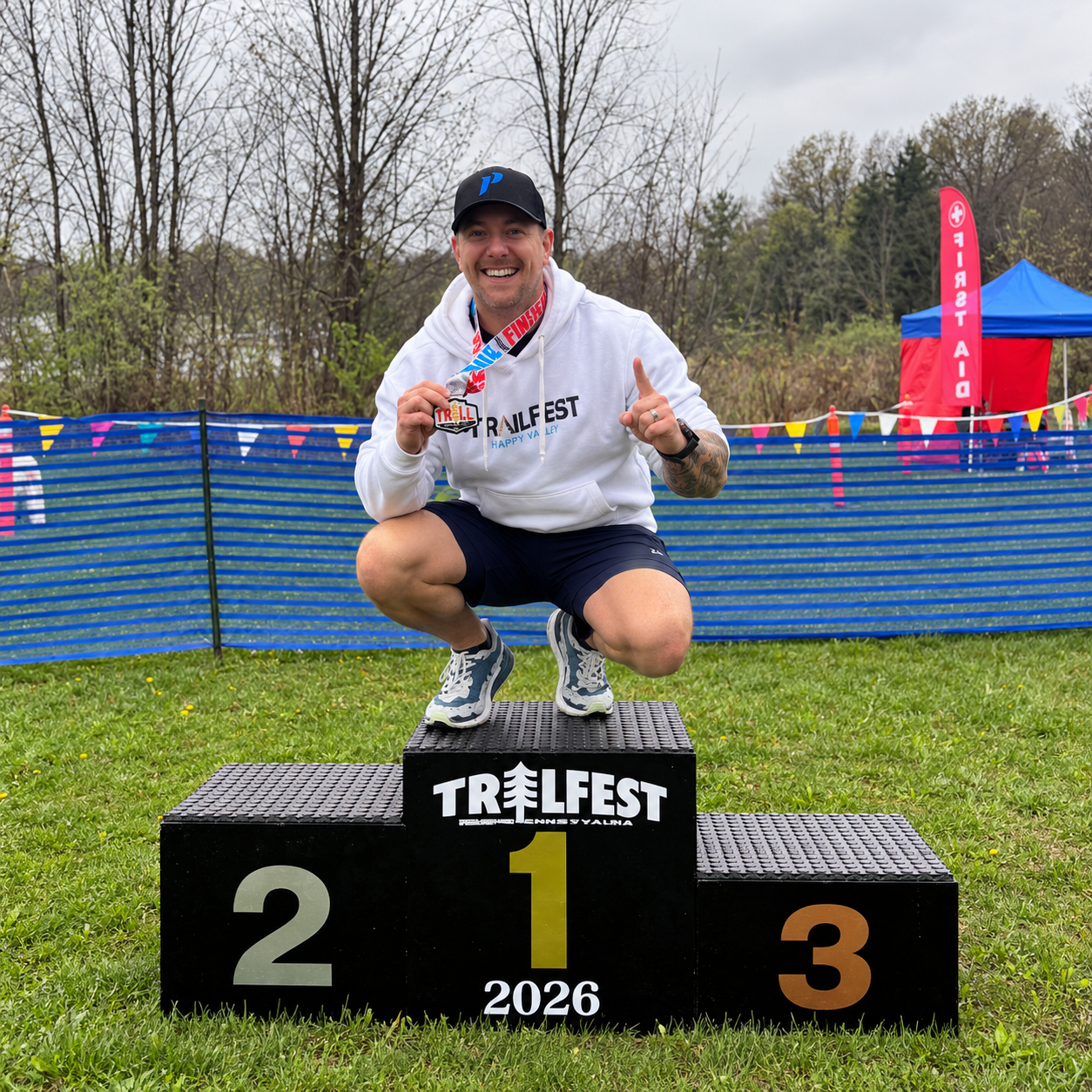
I've lost more than 60 pounds and maintained most of that weight loss for over two and a half years.
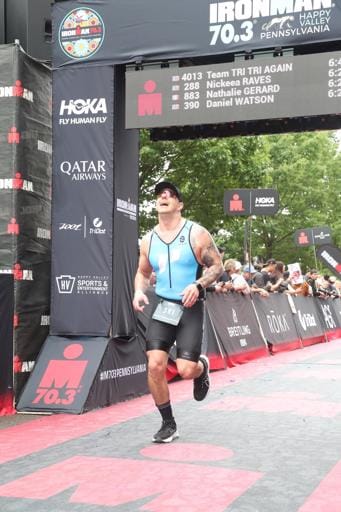
I've competed in multiple Ironman 70.3 races and dozens of trail races.
And something pretty incredible happened along the way.
I became competitive.
Depending on the distance and event, I've found myself competing near the front of races and becoming very competitive within my age group.
That still feels pretty wild to say.
When I started, I was focused on losing weight, getting healthier, and proving to myself that I could accomplish something difficult.
I wasn't thinking about podium finishes or competing against experienced endurance athletes.
But as my fitness improved, so did my expectations.
I wanted to get faster.
I wanted to run farther.
I wanted to see how competitive I could become.
And like a lot of people who get hooked on endurance sports, I started spending more and more time swimming, biking, and running.
The Problem Nobody Really Warned Me About: I Was Losing Muscle
Here's something I learned early in my endurance journey.
All that swimming, biking, and running was making me lighter, but I was also losing muscle mass.
Quickly.
My cardiovascular fitness was improving. I could run longer, ride farther, and recover from efforts that would have absolutely destroyed me a few years earlier.
But when I looked in the mirror, I wasn't necessarily seeing the body I wanted.
I was getting smaller.
And while losing weight was originally a major goal, I started realizing that being lighter wasn't the same thing as being stronger, more muscular, or even healthier in every respect.
To be clear, endurance training doesn't automatically cause muscle loss. Looking back, I believe the combination of high training volume, the demands of endurance racing, and not prioritizing strength training enough contributed to what I experienced.
I was asking my body to do a tremendous amount of work.
But I wasn't giving strength and muscle development the same attention.
That was a mistake I had to learn from.
I didn't want to become a smaller, weaker version of myself who could run long distances.
I wanted both.
Strength and endurance.
Muscle and cardiovascular fitness.
The ability to lift heavy and run far.
That's when I started changing my approach.
Why Lifting Heavy 3–5 Times Per Week Changed Everything
There are thousands of training guides, books, programs, and coaches out there.
Some focus on bodybuilding.
Others focus on marathon running, triathlons, strength training, or functional fitness.
I've learned that there's value in many different approaches.
But one of the biggest lessons from my own experience has been this:
Lifting heavy three to five times per week while endurance training has been an absolute game changer for me.
That doesn't mean everyone should immediately start lifting five days per week.
It means I've learned to make strength training a priority rather than an afterthought.
Instead of fitting in a few random weightlifting sessions whenever I wasn't running, I began approaching lifting with the same discipline and consistency I brought to endurance training.
I had to learn how to balance training volume, manage fatigue, eat enough protein, and give my body time to recover.
I'm still learning.
I'm still making adjustments.
Some weeks are better than others.
But my mindset has completely changed.
I'm no longer training exclusively to finish a race or reach a number on the scale.
I'm training to become a stronger, faster, more capable athlete while building a body I can maintain for the rest of my life.
What Is a Hybrid Athlete?
A hybrid athlete is someone who intentionally combines strength training and endurance training.
Instead of specializing exclusively in lifting weights or endurance sports, hybrid athletes work to develop both muscular strength and cardiovascular fitness.
A hybrid training program might include:
- Heavy compound lifting three to five days per week.
- Running two to four days per week.
- Long-distance trail runs or road races.
- Cycling, swimming, or other endurance activities.
- Mobility, recovery, and injury-prevention work.
The objective is to develop multiple physical capabilities rather than maximizing only one.
And personally, I love that approach.
I don't want to be someone who can bench press a ton of weight but gets winded walking up a steep hill.
I also don't want to be someone who can run 20 miles but struggles to move something heavy.
I want to be strong enough to handle physical demands and conditioned enough to keep going when things get difficult.
Whether that's racing through the woods, dragging a deer out of the backcountry, carrying my daughter, or simply staying active as I get older.
That's the kind of fitness that matters to me.
Can You Build Muscle While Running Long Distances?
This is one of the biggest questions surrounding hybrid athlete training.
Can you actually build muscle while running regularly?
Yes, you can.
But you need to understand how strength and endurance training interact.
For years, there has been debate about something called the interference effect.
The basic idea is that combining large amounts of endurance training with resistance training may interfere with certain strength or muscle-building adaptations.
However, research suggests the relationship is more complicated than simply saying cardio kills gains.
A 2022 systematic review and meta-analysis published in Sports Medicine found that concurrent aerobic and strength training generally did not compromise maximal strength or muscle hypertrophy, although explosive-strength adaptations could be more sensitive to training arrangements.
In other words, running doesn't automatically destroy your ability to build muscle.
But excessive training volume, inadequate nutrition, and poor recovery can make progress much harder.
Looking back at my own experience, I believe those factors played a role in the muscle loss I noticed during my early endurance training.
I was doing a lot of work.
But I hadn't yet figured out how to balance all of it.
Five Things That Matter When Building Muscle and Running
1. Strength training needs to be consistent.
You can't expect to maintain or build significant muscle if lifting is something you do once every couple of weeks.
2. You need adequate calories.
Running, cycling, and swimming can dramatically increase your energy expenditure. If you're consistently under-eating, muscle growth and recovery become more difficult.
3. Protein matters.
Consuming enough protein supports muscle repair, maintenance, and growth.
4. Not every run should be hard.
Easy aerobic runs can help develop endurance while creating less fatigue than repeated high-intensity workouts.
5. Recovery is part of training.
Your body needs time to adapt to the physical stress you're putting it through.
Learning these principles has been a major part of my fitness journey.
My Hybrid Athlete Training Philosophy: Lift Heavy, Run, Recover Smart
One thing I've learned is that there isn't one perfect hybrid athlete training plan.
What works for someone training for a marathon might not work for someone whose main goal is building muscle.
And what works for a 25-year-old with unlimited free time might not work for a 38-year-old father balancing marriage, a baby girl, and work.
Your training needs to fit your life.
For me, I generally like lifting weights three to five times per week while maintaining consistent endurance training.
But that doesn't mean every week looks identical.
If I'm preparing for a race, my running volume might increase.
If I'm focusing on building muscle, I might reduce my endurance volume and prioritize heavier lifting.
If I'm feeling beat up or recovering poorly, I adjust.
The goal is consistent progress, not destroying yourself every single day.
Here are the principles I try to follow.
Prioritize Compound Lifts
I believe the foundation of a good strength program should include exercises like:
- Squats
- Deadlifts
- Bench presses
- Overhead presses
- Rows
- Pull-ups
- Lunges
- Loaded carries
These exercises train multiple muscle groups and help develop practical strength.
That doesn't mean isolation exercises are useless.
Biceps curls, lateral raises, and other accessory movements absolutely have a place.
But when time is limited, compound movements give you a lot of value.
Keep Most Runs at an Easy Effort
This was another lesson endurance training taught me.
Not every run needs to be fast.
Not every run needs to be a personal record.
And not every workout needs to leave you completely exhausted.
A large portion of endurance development comes from consistent aerobic training.
For many runners, that means spending substantial time at an easy, conversational effort.
This is often described as Zone 2 training, although exact zone definitions vary.
The objective is to develop endurance without accumulating unnecessary fatigue.
Understand That Training Priorities Change
There are seasons when I want to race competitively.
There are seasons when I want to focus more on muscle development.
And there are seasons when maintaining fitness while balancing family and work is the biggest victory.
I don't think hybrid athletes should feel pressured to chase every goal at maximum intensity simultaneously.
Sometimes you prioritize endurance while maintaining strength.
Other times you prioritize strength while maintaining endurance.
That's not failure.
That's intelligent training.
Hybrid Athlete Training Plan: A Weekly Schedule for Lifting and Running
If you're looking for a practical way to combine heavy lifting with endurance training, here's a weekly schedule I would recommend as a starting point for an intermediate athlete.
This example includes four lifting sessions and three running sessions, with one optional additional easy run.
It's designed for someone who already has a foundation in both strength training and running.
If you're a beginner, reduce the training volume and build gradually.
Monday: Upper Body Strength
Start the week with a heavy upper-body workout.
Workout:
- Barbell bench press: 4 sets of 5–6 reps
- Pull-ups: 4 sets of 6–10 reps
- Overhead press: 3 sets of 6–8 reps
- Barbell rows: 3 sets of 8–10 reps
- Incline dumbbell press: 3 sets of 8–12 reps
- Farmer carries: 3 rounds of 30–45 seconds
The focus is progressive strength development.
You should be lifting challenging weights while maintaining proper form.
Tuesday: Zone 2 Run
Workout:
- 30–45 minutes of easy running
- Conversational pace
- Flat roads, treadmill, or trails
This run is about building your aerobic foundation.
Don't turn it into a race.
If you finish feeling like you could have continued running, that's often a good sign you kept the effort under control.
Wednesday: Lower Body Strength
Workout:
- Barbell squats: 4 sets of 5 reps
- Romanian deadlifts: 3 sets of 6–8 reps
- Bulgarian split squats: 3 sets of 8 reps per leg
- Standing calf raises: 3 sets of 12–15 reps
- Hanging knee raises: 3 sets of 10–15 reps
Strong legs matter for running.
Especially trail running.
Climbing hills, descending technical terrain, and navigating uneven ground all place demands on your lower body.
But be careful with training volume.
Heavy leg workouts can create significant soreness, especially when you're not accustomed to them.
Thursday: Upper Body Hypertrophy + Optional Easy Run
Strength workout:
- Incline dumbbell press: 3 sets of 8–12 reps
- Lat pulldowns: 3 sets of 10–12 reps
- Seated dumbbell shoulder press: 3 sets of 8–12 reps
- Cable rows: 3 sets of 10–12 reps
- Lateral raises: 3 sets of 12–15 reps
- Biceps curls: 3 sets of 10–12 reps
- Triceps extensions: 3 sets of 10–12 reps
Optional run:
20–30 minutes at an easy pace.
If you're fatigued, skip the run.
There's no reason to force additional mileage when your body needs recovery.
Friday: Lower Body Strength, Controlled Volume
Workout:
- Trap-bar deadlifts: 3 sets of 4–6 reps
- Reverse lunges: 2 sets of 8 reps per leg
- Hamstring curls: 2 sets of 10–12 reps
- Single-leg calf raises: 2 sets of 12 reps per leg
- Planks: 3 rounds of 45–60 seconds
Because Saturday is your long-run day, Friday shouldn't be a maximal-effort leg session.
Keep the volume manageable and avoid training to failure.
If your long run is a priority, moving this session earlier in the week or reducing it substantially may be a better option.
Saturday: Long Run or Trail Run
This is one of my favorite parts of training.
Getting outside.
Hitting the trails.
Running through the woods and pushing myself physically.
Workout:
- 45–90 minutes of running, depending on experience
- Trails, roads, or hills
- Mostly comfortable, sustainable effort
If you're training for a trail race or half marathon, your long run may eventually extend beyond this range.
Build gradually based on your experience and recovery.
Sunday: Rest and Recovery
Take a full rest day or enjoy light activity.
Walk with your family.
Stretch.
Spend time outdoors.
Let your body recover.
You don't need to earn your rest days.
They're part of the process.
Weekly Hybrid Athlete Training Schedule
| Day | Training | Primary Focus |
|---|---|---|
| Monday | Upper-body strength | Heavy lifting |
| Tuesday | Easy Zone 2 run | Aerobic endurance |
| Wednesday | Lower-body strength | Leg strength |
| Thursday | Upper-body hypertrophy + optional easy run | Muscle growth |
| Friday | Moderate lower-body strength | Strength maintenance |
| Saturday | Long run or trail run | Endurance |
| Sunday | Rest | Recovery |
This is an example, not a rigid schedule.
The best program is one you can consistently follow while making progress and recovering adequately.
Should You Run Before or After Lifting Weights?
This is one of the most common questions hybrid athletes ask.
And the answer depends on your priorities.
If Building Muscle Is Your Priority
Lift first.
Heavy resistance training requires energy, concentration, and good technique.
You generally don't want to exhaust your legs with a demanding run immediately before a heavy squat or deadlift session.
If Running Performance Is Your Priority
Run first when the session is important for your race preparation.
Speed workouts, hill repeats, and long race-specific efforts are better performed when you're relatively fresh.
If Both Are Important
Try to separate demanding workouts when possible.
For example, you might lift in the morning and complete an easy run later in the day.
Or alternate running and lifting days.
The goal is to avoid unnecessary fatigue that reduces the quality of both workouts.
How Many Days Per Week Should Hybrid Athletes Lift?
This is where my personal experience has shaped my opinion.
For me, lifting three to five times per week while endurance training has made a tremendous difference.
But the right number depends on your goals.
Three lifting days per week can be an excellent approach for someone who wants to maintain or build strength while prioritizing running.
Four lifting days per week can work well for athletes who want a balanced combination of muscle development and endurance.
Five lifting days per week may be appropriate for experienced athletes who prioritize strength or hypertrophy and can manage their total workload.
More isn't automatically better.
If you're training for a demanding endurance event, three well-structured lifting sessions may be more productive than five sessions that leave you constantly fatigued.
The key is understanding the difference between doing more work and making more progress.
How Much Running Should You Do While Building Muscle?
There isn't a universal mileage target.
A beginner trying to build muscle and improve cardiovascular health doesn't need the same running volume as someone preparing for an Ironman.
For most recreational hybrid athletes, two to four runs per week can provide a useful foundation.
Your training volume should reflect your primary goal.
| Goal | Running Frequency |
|---|---|
| Build muscle while improving basic endurance | 2–3 runs per week |
| Balanced strength and endurance | 3 runs per week |
| Train for a trail half marathon | 3–4 runs per week |
| Prioritize marathon performance | Often 4–6 runs per week |
These are broad guidelines, not requirements.
If you're new to running, start with shorter sessions and gradually increase your workload.
And if you're already running significant mileage, consider how much additional lifting your body can realistically recover from.
Nutrition for Hybrid Athletes: Something I'm Still Working On
I'll be the first to admit this.
Nutrition has been one of the hardest parts of my fitness journey.
I've proven to myself that I can train hard.
I've completed multiple Ironman 70.3 races.
I've competed in dozens of trail races.
I've lost more than 60 pounds and maintained most of that weight loss.
But consistently eating the way I should?
That's still something I'm working on.
And I think it's important to be open about that.
You can be disciplined in the gym and still struggle with food.
You can train for hours every week and still make poor nutrition decisions.
Fitness isn't about pretending you've mastered everything.
It's about recognizing where you need to improve and continuing to work on it.
Protein: A Priority for Building and Maintaining Muscle
Protein is especially important when you're combining endurance training and resistance training.
Research commonly supports approximately 1.4–2.0 grams of protein per kilogram of body weight per day for many active individuals.
For someone weighing 200 pounds, that's roughly 127–181 grams daily.
Personally, I aim for around 200 grams of protein per day.
That's my individual target, not a requirement for every hybrid athlete.
Some of my go-to protein sources include:
- Chicken breast
- Lean ground beef
- Venison
- Turkey
- Eggs
- Greek yogurt
- Protein shakes
I try to keep things relatively simple.
Carbohydrates Matter for Endurance Performance
One thing endurance training has taught me is that carbohydrates have an important role in performance.
When you're running long distances, cycling, swimming, and lifting weights, your body needs fuel.
Carbohydrates help replenish muscle glycogen, which supports demanding training sessions.
Rice, oats, potatoes, fruit, and whole grains can all be useful parts of a hybrid athlete's diet.
Don't Make the Mistake of Constantly Under-Eating
This is especially important for people trying to lose body fat while improving endurance.
A calorie deficit may help with weight loss.
But combining aggressive calorie restriction with high training volume can negatively affect recovery, performance, and muscle retention.
If you're trying to lose fat while maintaining muscle, a more moderate approach is generally more sustainable.
The Biggest Hybrid Training Mistakes I've Learned to Avoid
1. Focusing Too Much on Endurance and Neglecting Strength
This was a major lesson from my early racing experience.
I became a better endurance athlete, but I wasn't giving strength training enough attention.
I eventually realized I wanted more than just the ability to run or ride long distances.
I wanted to maintain muscle and become stronger.
2. Thinking Every Workout Needs to Be Hard
There was a time when I associated a good workout with being completely exhausted afterward.
But not every training session needs to be brutal.
Some days are for lifting heavy.
Some days are for running easy.
Some days are for recovery.
All of them serve a purpose.
3. Ignoring Nutrition
You can train incredibly hard and still struggle to achieve the body composition or performance you're after if your nutrition isn't supporting your goals.
This remains an area where I'm constantly trying to improve.
4. Following Someone Else's Program Without Considering Your Life
There are endless workout programs available.
But a training plan needs to work for your schedule, your experience, and your priorities.
A father working full-time may need a very different routine from someone whose entire career revolves around fitness.
5. Refusing to Adjust
Some weeks you're going to feel incredible.
Other weeks you're going to feel exhausted.
You might have a sick child, a demanding work schedule, or simply need additional recovery.
Learn to adjust.
Consistency over months and years matters more than executing every workout perfectly.
Why Hybrid Training Matters More to Me Now That I'm a Father
Becoming a father has given my fitness journey an entirely different meaning.
I still want to compete.
I still want to run fast.
I still want to lift heavy and build muscle.
And yes, I want to look good physically.
But there's something much bigger behind it now.
I want to be healthy for my family.
I want to be the dad who can run alongside his daughter when she's older.
I want to be able to carry her when she's tired, take her hiking, teach her about the outdoors, and have the energy to actually enjoy those experiences.
I don't want to reach my 40s, 50s, or 60s and feel like my best physical years are behind me simply because I stopped taking care of myself.
I want to keep hunting, fishing, running trails, lifting weights, and exploring the outdoors for as long as I'm able.
And I want my daughter to grow up seeing what discipline, consistency, and taking care of your health look like.
Not because I expect her to become an athlete.
But because I want her to understand that being healthy and physically capable opens doors in life.
I'm not training just for myself anymore.
I'm training to be a better husband, a stronger father, and someone who can continue showing up for the people who depend on me.
That's a much bigger motivation than any race medal or number on a scale.
How to Start Hybrid Training as a Beginner
If you're new to lifting and running, don't immediately jump into a six-day training program.
Start by building consistency.
Weeks 1–4: Establish Your Foundation
- Lift weights twice per week.
- Run or run-walk twice per week.
- Focus on proper technique.
- Keep running intensity manageable.
- Prioritize sleep and recovery.
Weeks 5–8: Increase Your Workload Gradually
- Add a third strength session if recovery allows.
- Gradually increase running duration.
- Continue emphasizing easy aerobic work.
- Track your progress.
Weeks 9–12: Develop a Structured Hybrid Routine
- Lift three times per week.
- Run two or three times per week.
- Begin setting specific strength and endurance goals.
- Adjust your schedule based on performance and recovery.
You don't need to become a hybrid athlete overnight.
Build the foundation first.
Frequently Asked Questions About Hybrid Athlete Training
Can you lift heavy and run long distances every week?
Yes. Many athletes successfully combine heavy resistance training with long-distance running. The key is managing overall training volume, eating adequately, and allowing sufficient recovery.
Does running cause muscle loss?
Running does not automatically cause muscle loss. However, high endurance training volume combined with inadequate nutrition, insufficient strength training, or poor recovery can contribute to muscle loss.
Is lifting three to five times per week too much for a runner?
Not necessarily, but it depends on your running volume, lifting intensity, experience, and recovery. Three sessions may be appropriate for many runners, while four or five sessions require more careful workload management.
Can you build muscle while training for a half marathon?
Yes, particularly if you're newer to resistance training. However, as endurance training volume increases, maximizing muscle growth may become more difficult.
Is hybrid training good for men over 35?
Hybrid training can help men develop muscular strength and cardiovascular fitness. Both are important components of long-term health and physical function.
Should hybrid athletes train every day?
Not necessarily. Rest and recovery are essential parts of training. The number of weekly sessions should reflect your experience, fitness goals, and ability to recover.
Final Thoughts: I'm Not Training for One Race. I'm Training for Life.
Less than three years ago, I was new to endurance racing.
Since then, I've lost more than 60 pounds, completed multiple Ironman 70.3 races, competed in dozens of trail races, and discovered a level of competitiveness I never expected.
But the journey hasn't been perfect.
I've made mistakes.
I've struggled with nutrition.
I've lost muscle while chasing endurance goals.
And I've had to learn how to adapt.
One of the most valuable things I've discovered is that I don't have to choose between being strong and having endurance.
I can pursue both.
I can lift heavy weights, run long distances, compete in races, and continue building a stronger body.
There will be times when endurance takes priority.
There will be times when strength becomes the focus.
And there will be times when simply maintaining consistency while balancing work and family is enough.
But the bigger mission stays the same.
I want to be strong.
I want to be fast.
I want to be healthy.
I want to be capable.
And I want to be around, physically and mentally, for my family for as long as possible.
Lift heavy. Run far. Be present. Train for life.
Wild NatureMan
Research and References
- Schumann et al. (2022). Compatibility of Concurrent Aerobic and Strength Training for Skeletal Muscle Size and Function: An Updated Systematic Review and Meta-Analysis. Sports Medicine.
- Morton et al. (2018). A Systematic Review, Meta-Analysis and Meta-Regression of the Effect of Protein Supplementation on Resistance Training-Induced Gains in Muscle Mass and Strength in Healthy Adults. British Journal of Sports Medicine.
- American College of Sports Medicine. Progression Models in Resistance Training for Healthy Adults. Medicine & Science in Sports & Exercise.
- International Society of Sports Nutrition. Position Stand: Protein and Exercise. Journal of the International Society of Sports Nutrition.